


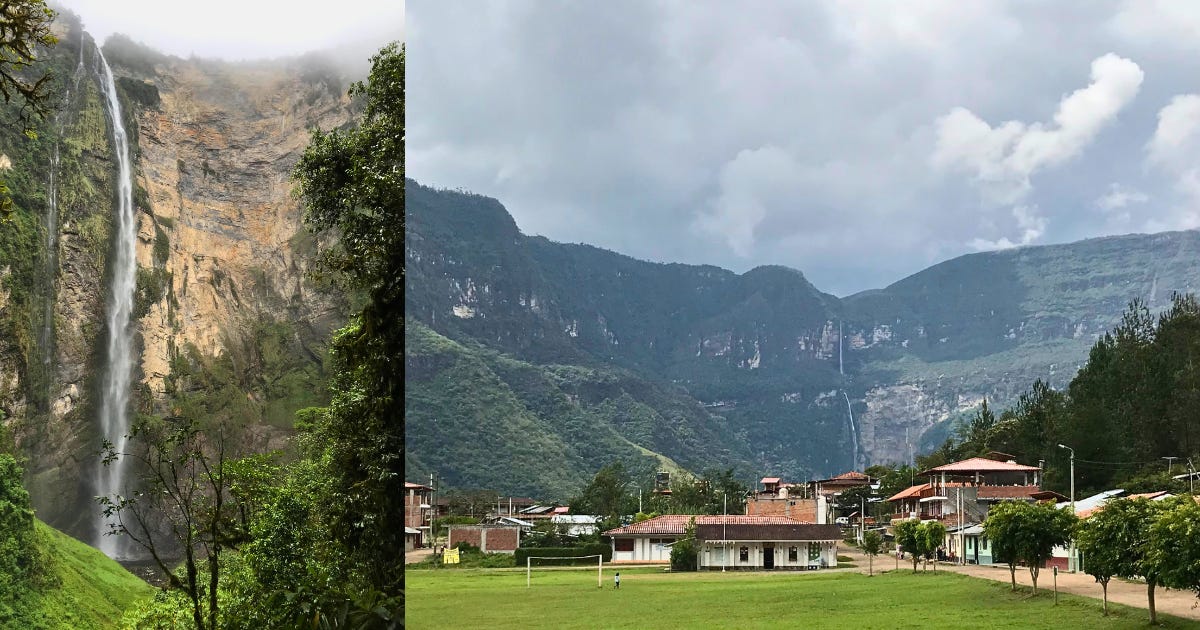
The moment you see the Gocta waterfall for the first time is unlike any other.
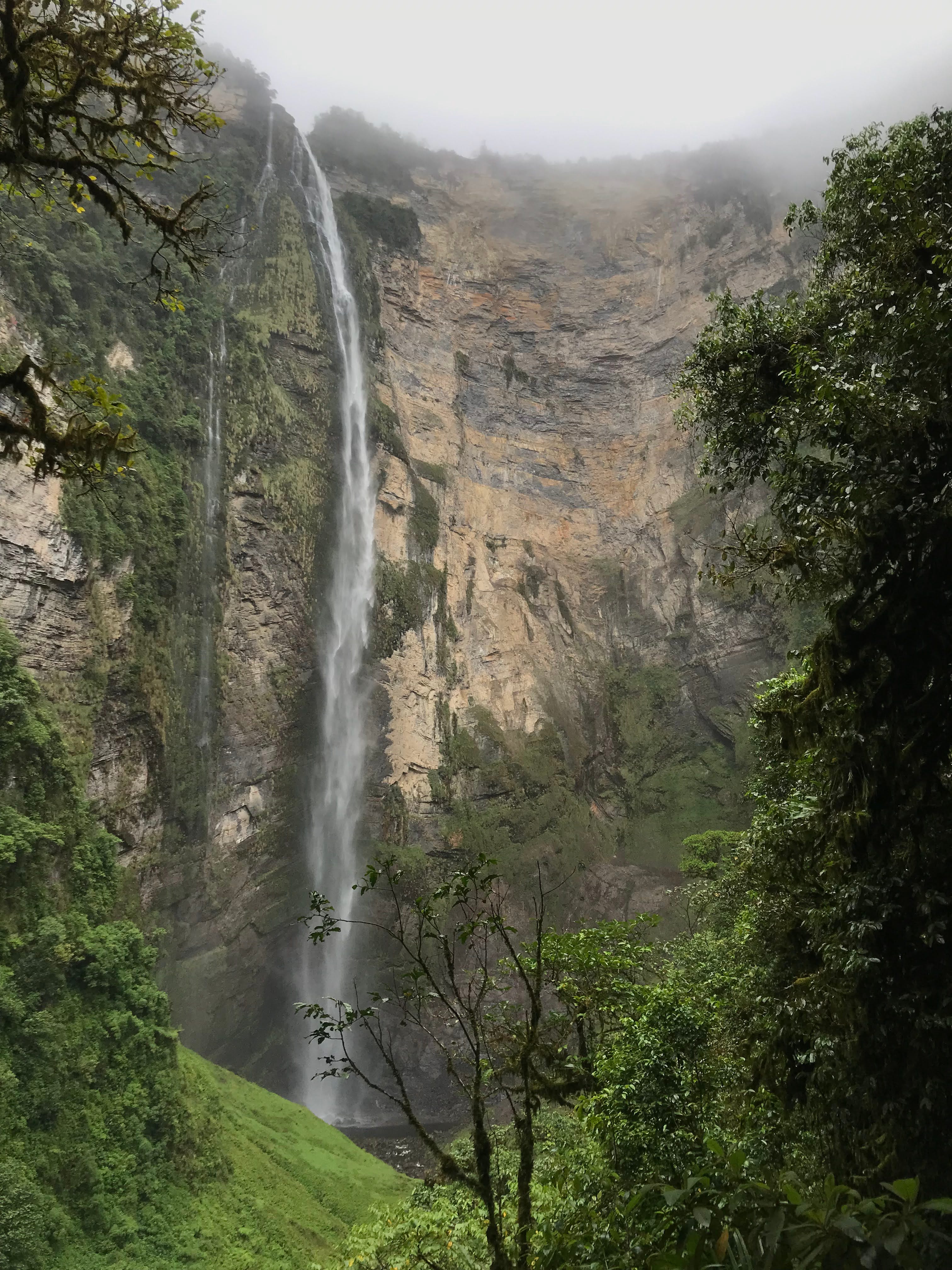
From the back of a tuktuk—or, mototaxi as they call them in Peru—dashing uphill on a dirt road, you’ll whip around a corner and there it is: an incredible, 2,530-foot-tall double-drop waterfall wedged between green mountains.
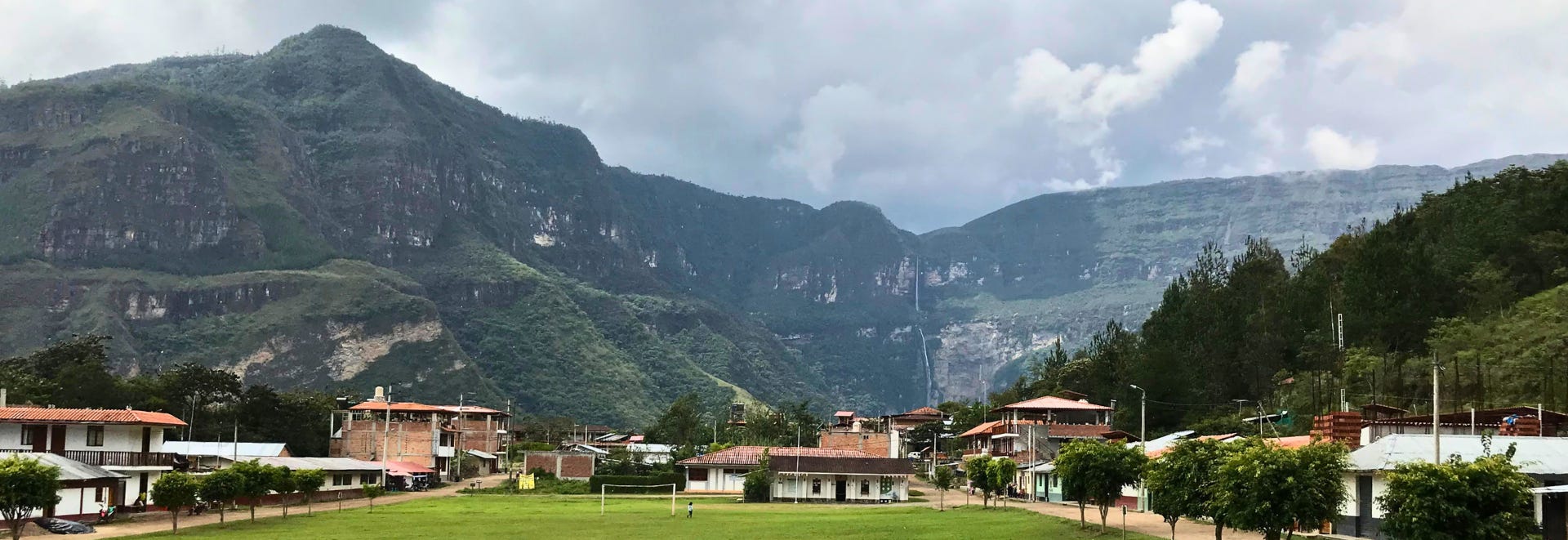
Even from a distance, the Gocta waterfall is huge. But as you get closer, first arriving in Cocachimba, then hiking towards the base of the waterfall, it only gets more impressive.
But there is a cost. It’s a long (15-hour) overnight bus ride, a shorter bus ride, and an exciting tuktuk ride—just to get to Cocachimba, Peru, the little pueblo (small town) that’s home to this gorgeous waterfall. From then, it’s a multi-hour out-and-back hike to the waterfall.
That’s why the Gocta waterfall is what I call one of Peru’s best-kept secrets. Very few tourists venture this deep into Peru. And though it’s a little tricky to get to, it’s well worth it.
In fact, my trip to see the Gocta Waterfall was one of my most memorable solo travel adventures.
The Gocta Waterfall: One of the Most Impressive Waterfalls in Peru, and in the World
The Gocta Waterfall is one of the tallest in the world. Located in the Amazon region of Peru near the city of Chachapoyas, this amazing waterfall is:
2,530 feet tall—that’s the height of two empire state buildings stacked on top of each other!
A perennial waterfall, meaning it stays full and flows throughout the entire year (that means no matter what time of year you visit, you’ll be able to enjoy its beauty).
A two-tier waterfall—it has two drops, and it’s so tall that often the upper falls are completely covered by clouds. From the town of Cocachimba, you can often only see the lower falls after the second drop. And even then, it’s an incredible sight.
Gocta’s Mysterious Legends
For years and years, only locals knew about this gigantic waterfall; for them, it’s a sacred place home to Kusi Kamayu, a mythical protector and guardian spirit. In search of blessings and good fortune, locals would hike to the top of the upper falls where Kusi Kamayu was said to reside.
But they never ventured too close to the bottom pool of the waterfall. Stories of a beautiful blond mermaid (who curses anyone who comes too close) and a giant snake guarding a pot of gold float around this little Amazonian town.
But in 2002, when a German researcher named Stefan Ziemendorff visited the waterfall, he was so impressed he convinced the government to measure it. That brought the waterfall some international fame and sparked tourism in this area.
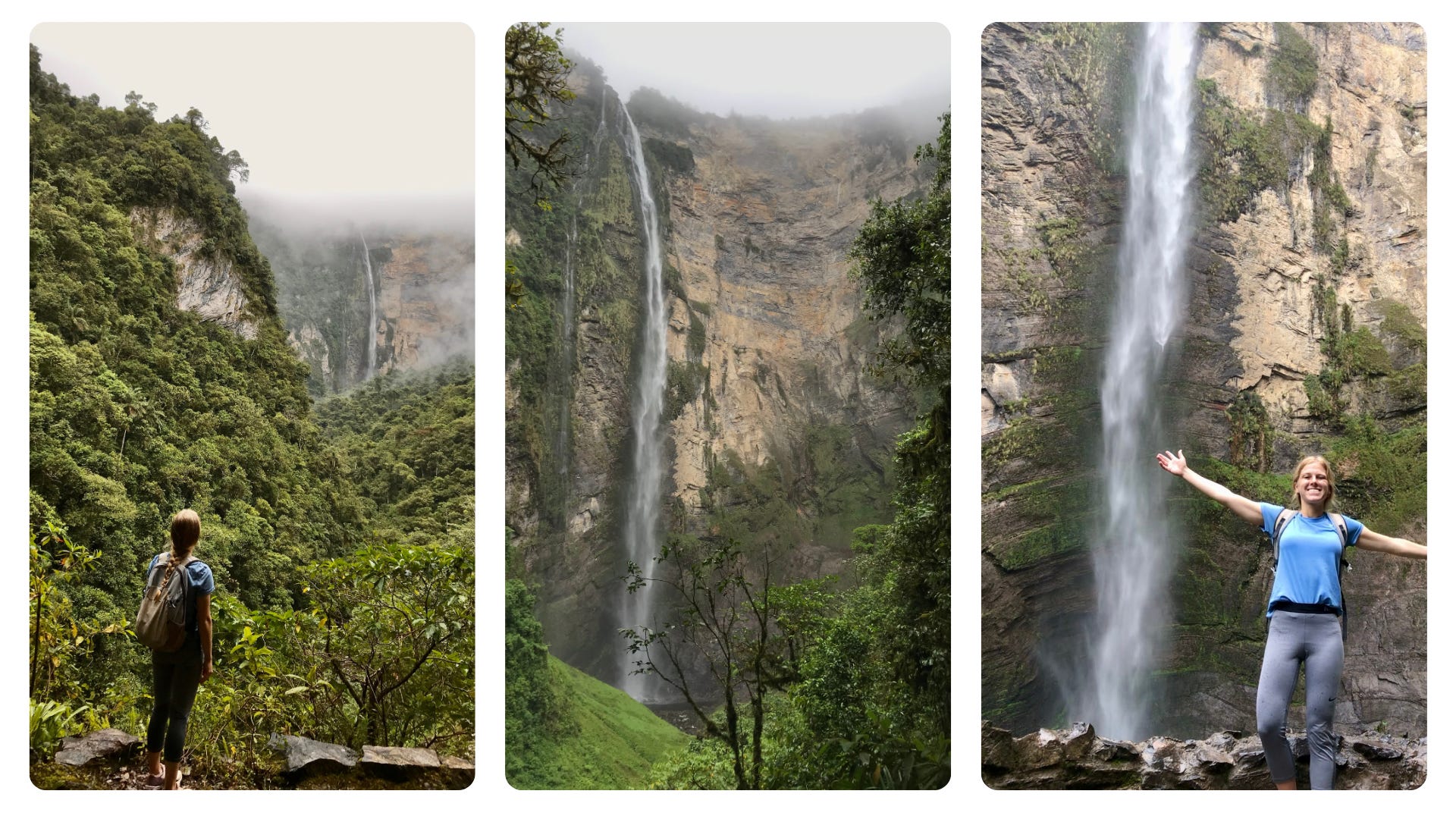
How to Get To The Gocta Waterfall
If you look at the Gocta Waterfall on a map, you’ll quickly realize that it’s really in the middle of the Peruvian mountains bordering the country’s Amazon region. The nearest “city” is the town of Chachapoyas (larger cities like Jaen and Tarapoto are 3-7 hours away by car).
I took a bus from Trujillo to Chachapoyas, which was quite a long trip. The bus left at 4pm and arrived at 7am the next day—15 hours in total. It cost 132 soles ($36 USD). I slept most of the way, but it wasn’t the most comfortable journey and I don’t know if I’d do it again.
The best way to get to Gocta is flying into Chachapoyas—There are flights from Lima, but they are not at all frequent (there might be just 3-4 options a week). You could also fly into Jaen and then take a 3-4 hour bus to Chachapoyas (compared to a 15 hour bus ride, that sounds pretty good).
To sum it up, these are your three options for getting to Chachapoyas:
From Trujillo by bus: 15 hours, $35-$50 USD
From Lima by plane: 1.5 hours, $150-$300 USD
From Lima by plane then bus: 4.5 hours, $120-$150 USD
Once you get to Chachapoyas, you’ll have to take a bus to Cocachimba—the little town where the trailhead to the Gocta Waterfall is located. Here’s how:
Go to the Chachapoyas bus station.
Find a bus heading to Pedro Ruiz. (The bus ride costs 10-15 soles ($3-$4 USD) and takes about an hour.)
Tell them to drop you off in Cocahuayco.
On the side of the road in Cocahuayco, you’ll take a mototaxi to Cocachimba (for about 10 soles).
This is a beautiful mototaxi adventure—you’ll be driven through a small, windy road up the mountain. Everything around you is lush and green.
After a few minutes, you’ll go around a corner and see the huge mountains in the distance. Then, you’ll see it for the first time—the Gocta Waterfall. It’s a memorable moment, because it really is such a spectacular sight. Even from a distance you’ll be amazed at how tall and beautiful this wonder of nature is.
Where to Stay in Cocachimba
Cocachimba is a super small town made up of just a few hotels for the tourists who venture into this region of Peru.
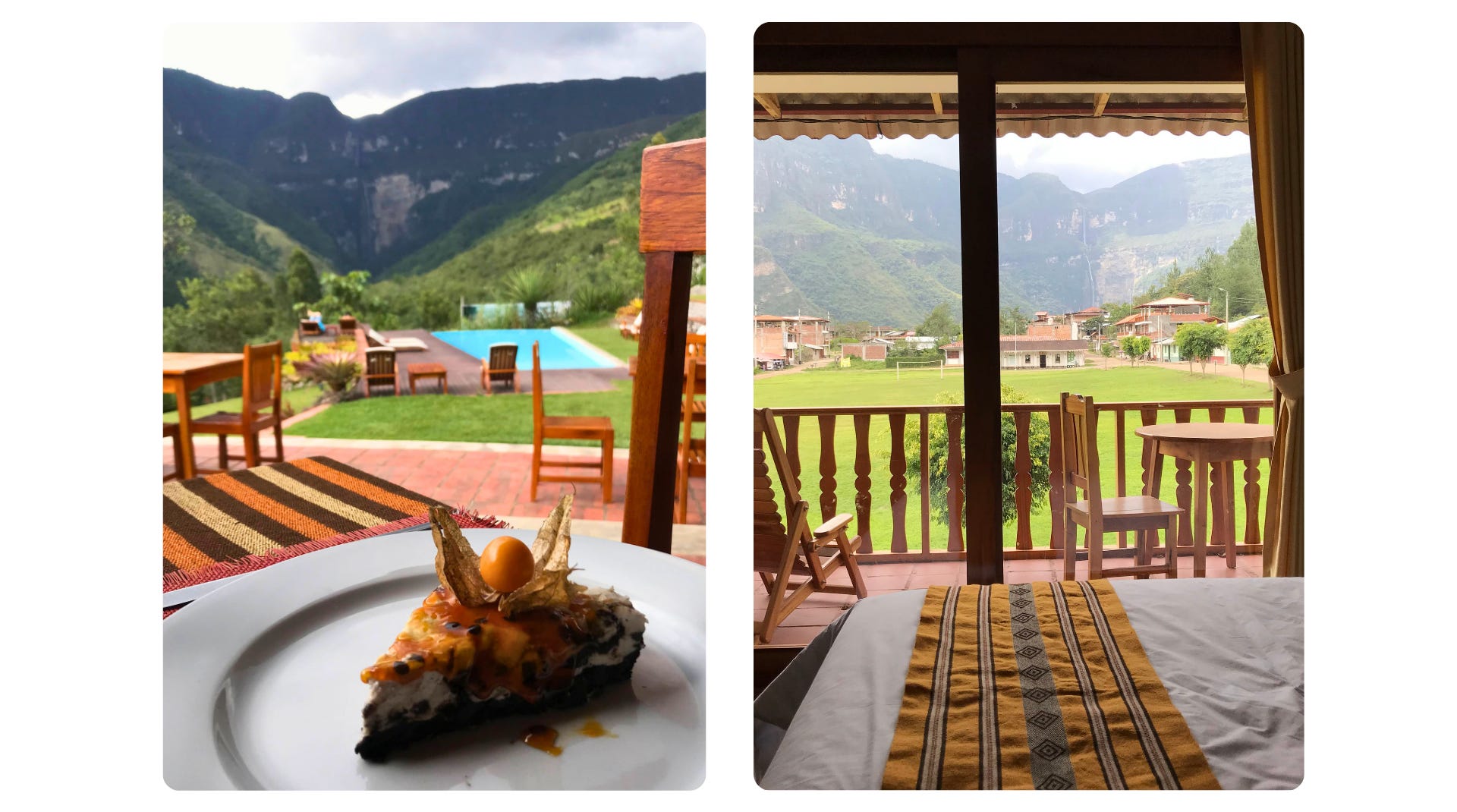
Gocta Miradors—I stayed here and had an incredible view of the waterfall for just $45 USD per night. (Can you believe this was one of the most expensive places I stayed during the entire time I lived in Peru?)
Gocta Andes Lodge—For an even better view, and a pool! Around $150-200 USD per night. Alternatively, you can eat lunch here and get the view for free (well, for the price of a fancy lunch).
GoctaLab Nature Lodge—A more luxurious option. Their beautiful rooms and stunning lodge will make you feel like you’re in a nature retreat, with incredible views of the waterfall.
How to Hike to the Gocta Waterfall
The hike to the Gocta Waterfall is a well-marked, easy-to-follow path that can be hiked without a tour guide. The hike is:
6.4 miles (10.2 km) round-trip
About 5 hours total. Depending on how fast you walk, it’ll take you from 2-3 hours to get to the base of the waterfall and about the same to get back.
Entrance fee: 20 soles ($6 USD). Pay at the beginning of the hike at a little wooden stand.
It’s a gorgeous hike through a lush green forest. You’ll cross a wooden bridge, listen to chirping birds and water running through the river down below you, and enjoy the fresh air in the mountains. Parts of the path are paved with a cement / rock mixture, and others are just dirt, but the path is wide and well-marked.
I went in the middle of March and was very happy I brought a raincoat—it sprinkled most of the way but wasn’t cold. Listening to raindrops fall on the big, green rainforest leaves along the trail was enjoyable and relaxing.
The entrance fee for the Gocta Waterfall hike is 20 soles ($6 USD) and you pay at the beginning of the hike in a little wooden stand.
Since this is a 5-6 hour adventure, I recommend starting in the morning so you have time to enjoy the hike and get back to your hotel or the city of Chachapoyas without any problems.
There’s also another hike that takes you to a view of the upper falls and then down to the lower falls. That one is longer and a great option for experienced hikers. The Gocta Waterfalls aren’t a popular tourist attraction, so whichever hike you choose, you’ll likely be one of just a handful of people on the trail that day.
Other Things To See Around Chachapoyas
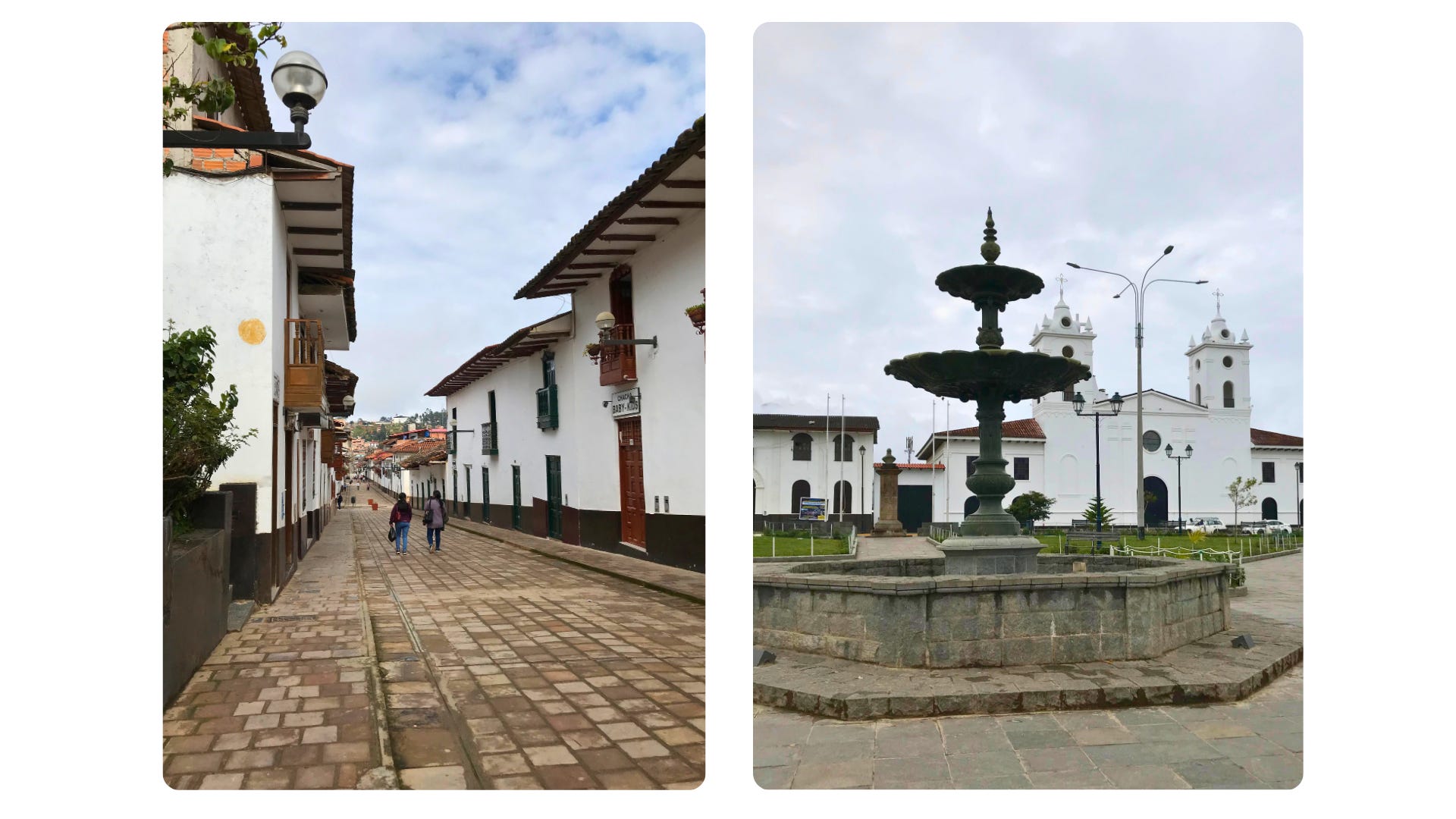
Chachapoyas is a small city you can walk around in a single afternoon. There’s a lot of cute places to stay, I stayed at Casona del Rosario, for 50-60 soles per night ($14-$15 USD) and it was fantastic—the great location close to the Plaza de Armas in the center of Chachapoyas and the kind people who work there make it a fantastic opinion.
Chachapoyas is filled with white colonial-style buildings with brown wooden balconies and features. There’s not much to see in the town; Calle Amazonas is the most popular street with a few stores and things to look at, and the market is a great place to get snacks.
The exciting stuff is outside of the city of Chachapoyas. Make sure you do these two awesome day trips after you see the incredible Gocta Waterfall:
Day Trip #1: Kuelap
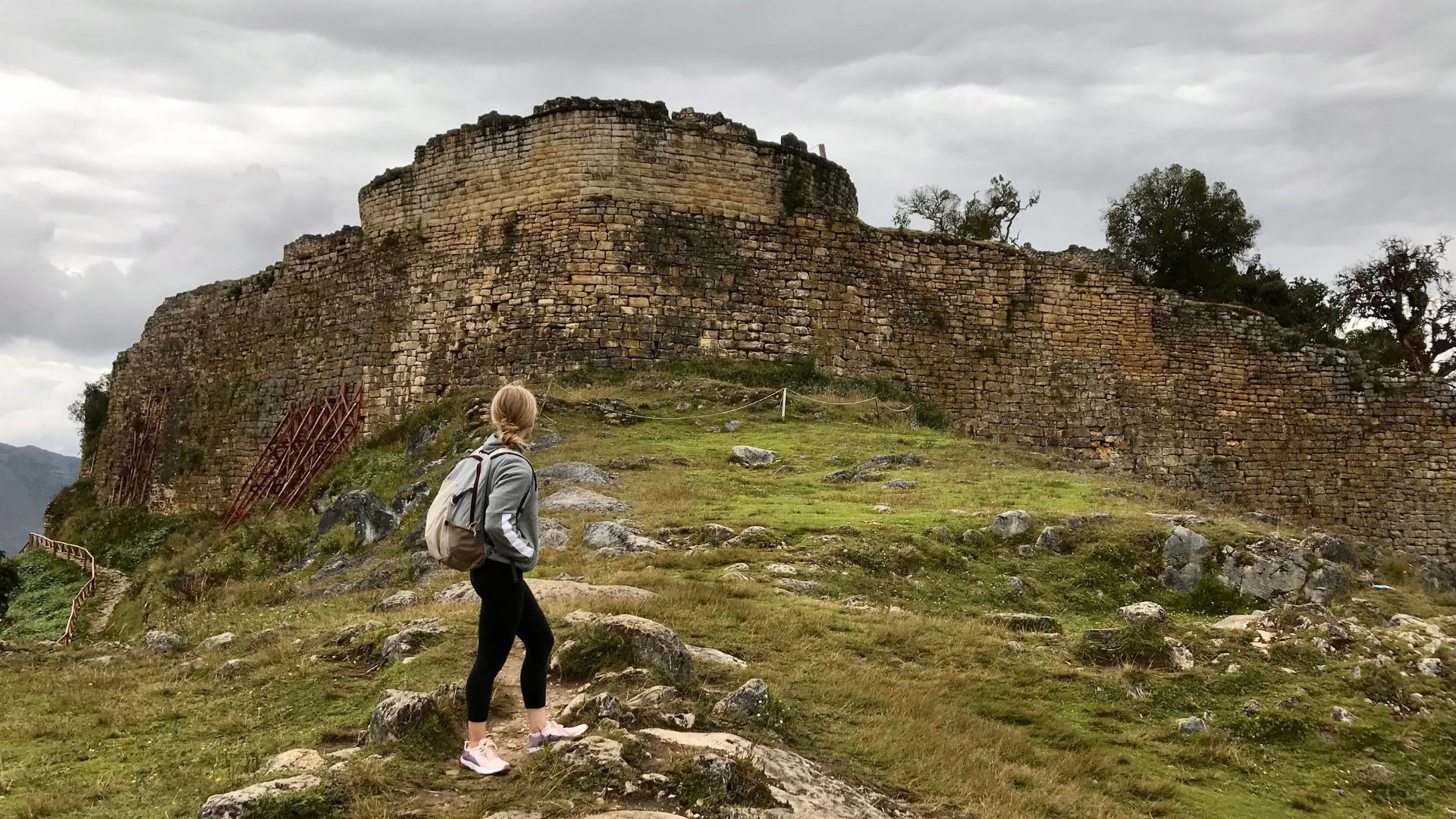
Kuelap is an impressive ancient walled city on the top of a mountain—basically in the sky. Sometimes called the “Machu Picchu of the North,” Kuelap is one of the largest stone ruins in Latin America.
It has also been known as “the city in the clouds” and the Chachapoya civilization that built it (before the Inca were around) are called the “Warriors of the Clouds.” They built their city on the top of one of the highest mountains in the area not just as a power-move, but also to be closer to their gods.
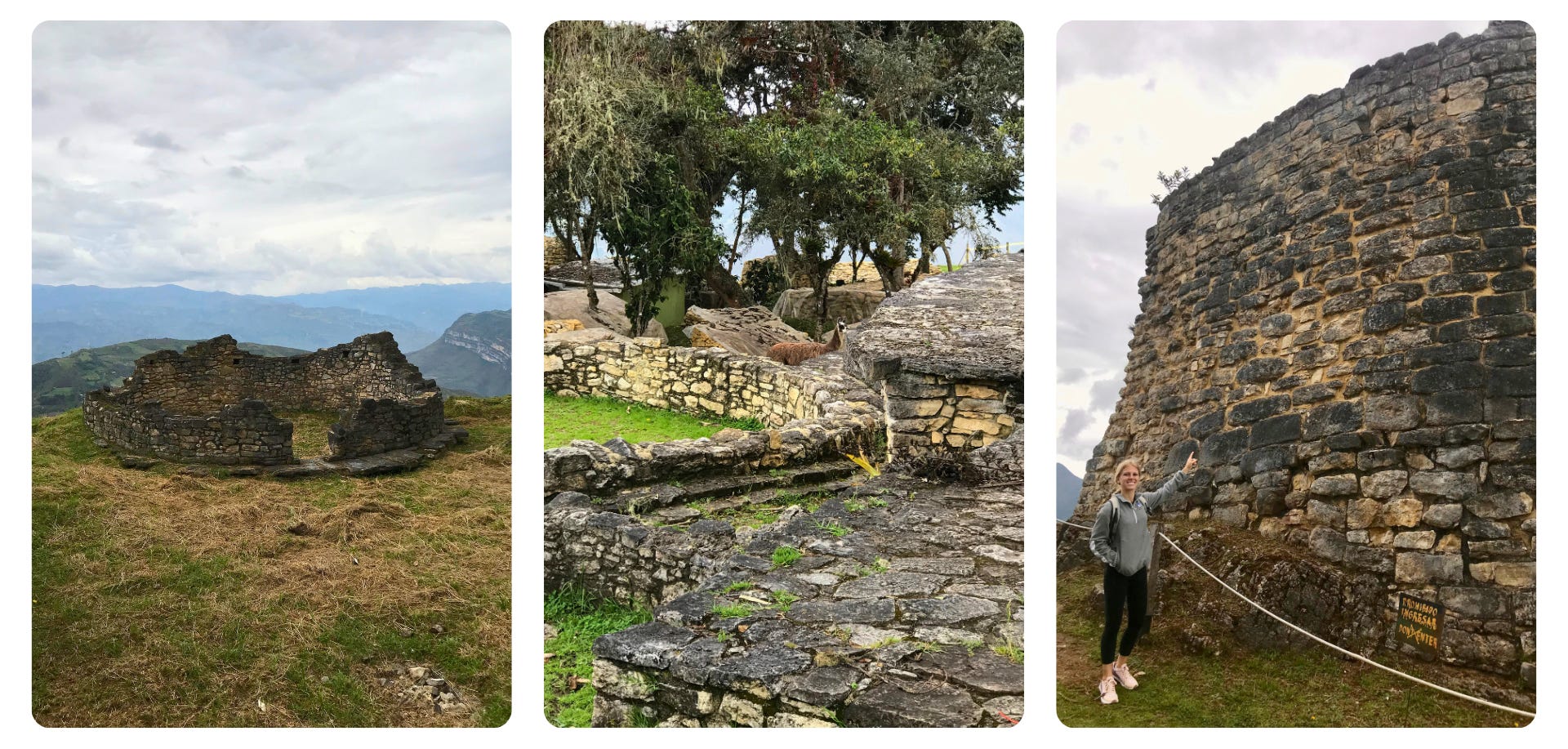
The ancient civilization lived in circular stone dwellings—during your visit you’ll see their unique architectural style and anti-seismic creations. The unique building style and geometric designs are impressive—and the views from Kuelap are breathtaking as well.
The fortress they built out of rock around the 6th century AD has been well preserved and is worth a visit.
To get to the Kuelap fortress, you’ll take a 20-minute cable car ride over the Utcubamba River Valley to the 9,842 foot-tall mountain where the archaeological site is located.
You’ll definitely want a tour guide for this one so you can learn about the impressive Chachapoyas culture and explore this fantastic archeological site with an expert guide. This Chachapoyas Kuelap Fortress Full Day Tour is a great option.
Day Trip #2: Karajía Sarcophagi and Quiocta Caves
Another impressive day trip option is a visit to the Karajía Sarcophagi and Quiocta Caves.
The Karajía Sarcophagi are unique human-shaped tombs located along the cliffside of a high mountain near the town of Chachapoyas. Archeologists and historians think that this exclusive burial place is where the highest members of the Chachapoyas society (who lived in the fortress of Kuelap) were buried.
It’s an impressive site and one of the many archeological and historical wonders of Peru.
You’ll also visit the Quiocta caves—where you’ll find a fascinating mix of pre-Inca cave paintings, stalagmites and stalactites, and even human bones and skulls. Bring a headlamp so you can explore the many different surprises in these unique caves.
This full day tour takes you to see both the Quiocta caves and the Karajía Sarcophagi.
Explore a Different Side of Peru
Peru has much more to offer than Machu Picchu, rainbow mountains, and desert oases. Don’t get me wrong—those are beautiful attractions and definitely worth a visit.
But there’s so much more.
Visiting Chachapoyas and the Gocta Waterfall is a great first trip to venture deeper into this beautiful country. There’s so many more natural and architectural wonders to see off the beaten path.
After enjoying this trip with minimal crowds, time and space to enjoy at your own pace, and absolutely jaw-dropping sights, don’t be surprised if you’re drawn to visit more of Peru’s hidden treasures—like Chan Chan, the largest adobe-built city in the world, or the turquoise waters of Laguna 69, a beautiful lake surrounded by snow-capped mountains in Huaraz.
Peru truly has something for everyone.
Traveling to Peru soon? Get the complete 4-day foodie itinerary for Lima, Peru. Inside, you’ll find:
A day-by-day eating plan (breakfast, lunch, dinner, and dessert),
An organized and easy-to-use Google Map with all the restaurant mentioned here (plus a few more I recommend if you have more time),
And, exactly what to order at each spot so you can enjoy the classics of world-famous Peruvian gastronomy.