


Spain is much more than just paella and tapas. Sure, that’s a good start—and who doesn’t love a good tapas tour? But Spain has many other delicious dishes to offer.
I would describe Spain’s gastronomy in three words: simple, fresh, and nostalgic. Spanish dishes spotlight simple ingredients like tomato, bread, olive oil, and potatoes, combined with staple spices like paprika, garlic, and saffron.
As for nostalgia, most dishes are deeply regional, and many were born out of the scarcity caused by the Spanish Civil War. Here, food is richly intertwined with cultural identity. (Just ask any Spaniard whether onions belong in tortilla de patata or not—and prepare yourself for a lecture.)
But it works. It works because the ingredients are fresh (Spanish tomatoes, oranges, and olives are the best in the world). It works because the dishes are simple, yet filling—and distinctly Spanish.
How Spaniards Actually Eat (So You Can Blend In)
One of the factors that really sets Spanish gastronomy apart is the timing, when they eat their meals:
Breakfast is from 7-9 am. A typical breakfast includes a tostada (a halved, toasted baguette) with olive oil, jam, or tomato. Tortilla de patata is another popular breakfast favorite (more on that later).
Lunch is from 2-4 pm, and it’s the biggest meal of the day. It’s very common to serve a fresh salad with olive oil and vinegar and bread with this meal. Seafood is common, especially in coastal areas.
Dinner is served after 9pm (very late!) and might include favorites like albondigas (meatballs) or homemade croquetas.
If you want to find authentic eats, try to follow the Spanish schedule. And, if you’re looking for next-level authenticity, order regional favorites based on the city you’re in.
What “Authentic” Spanish Cuisine Really Means
Personally, I define authentic cuisine as what the locals eat and cook in their homes. Serving as a missionary in Spain and being invited into people’s homes for meals gave me a unique inside look into what really makes up Spanish food.
The list you’ll find here is filled with things that Spanish abuelas, families, and mothers served me at their dinner tables. They’re authentic; to me, these dishes truly define Spanish gastronomy.
Now, like most countries, authentic Spanish cuisine varies by region and season.
If you’re in Galicia in the north of Spain, you’ll want to try the famous pulpo gallego, Galician octopus and potatoes seasoned with paprika. If you’re in Andalusia in the south, you’ll see gazpacho, a cold tomato and vegetable soup, on a lot of menus.
If you’re near Valencia, make sure you try the refreshing and creamy Spanish drink called horchata, made from tiger nuts. And if you’re in Spain in the spring—specifically in March or April—do try torrijas, Spain’s version of French toast.
You’ll also find unique products from specific regions of Spain—cheeses like queso manchego from Castilla la Mancha and cabrales from Asturias and fruits like nisperos from Spain’s Costa Blanca.
10 Authentic Spanish Dishes You Must Try
Despite regional and seasonal variations, these 10 dishes stand out and are almost universal across Spain. After living in many different cities in Spain (Alicante, Pamplona, and Santander just to name a few), these are my favorite Spanish dishes you must try when you visit:
#1 Paella: The Iconic Spanish Rice Dish
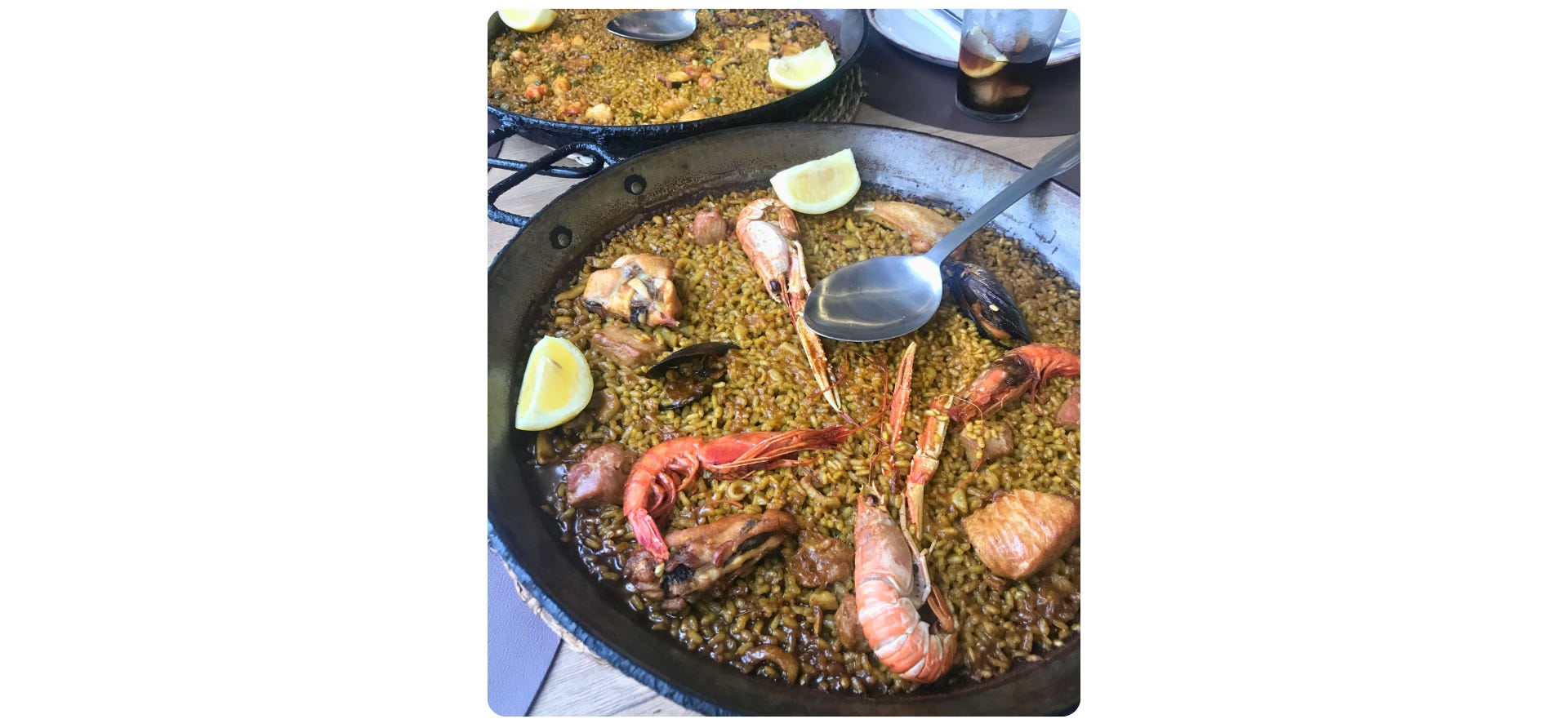
Paella originated in Valencia, Spain—where it was made with chicken and rabbit (and sometimes snails), rather than seafood. Today, you can find this famous dish in almost every Spanish city (in restaurants in Alicante, they don’t even call it paella, they just call it arroz, or rice).
You can find seafood paellas with shrimp, clams, octopus, and squid, vegetable paellas, chicken and rabbit paellas, or combination of those ingredients. But they all have one secret ingredient: saffron. This very expensive spice gives the dish a vibrant, orangey color and a savory flavor.
This famous dish is made in a large, shallow metal pan called a paellera. Spaniards traditionally make paella for large gatherings or Sunday dinners with family. They eat it with a fresh salad with vinegar and olive oil as dressing alongside fresh bread and alioli—a delicious garlic mayo.
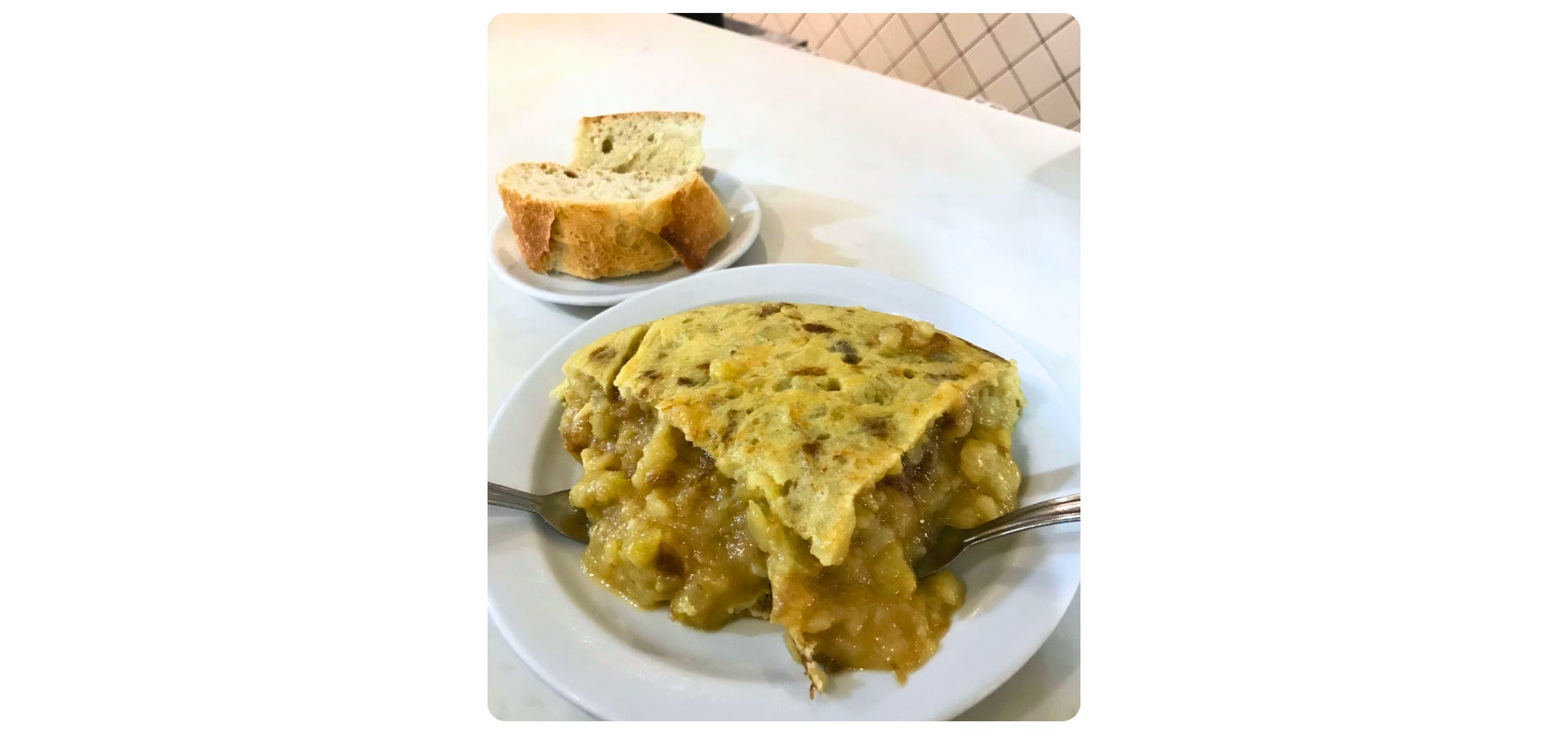
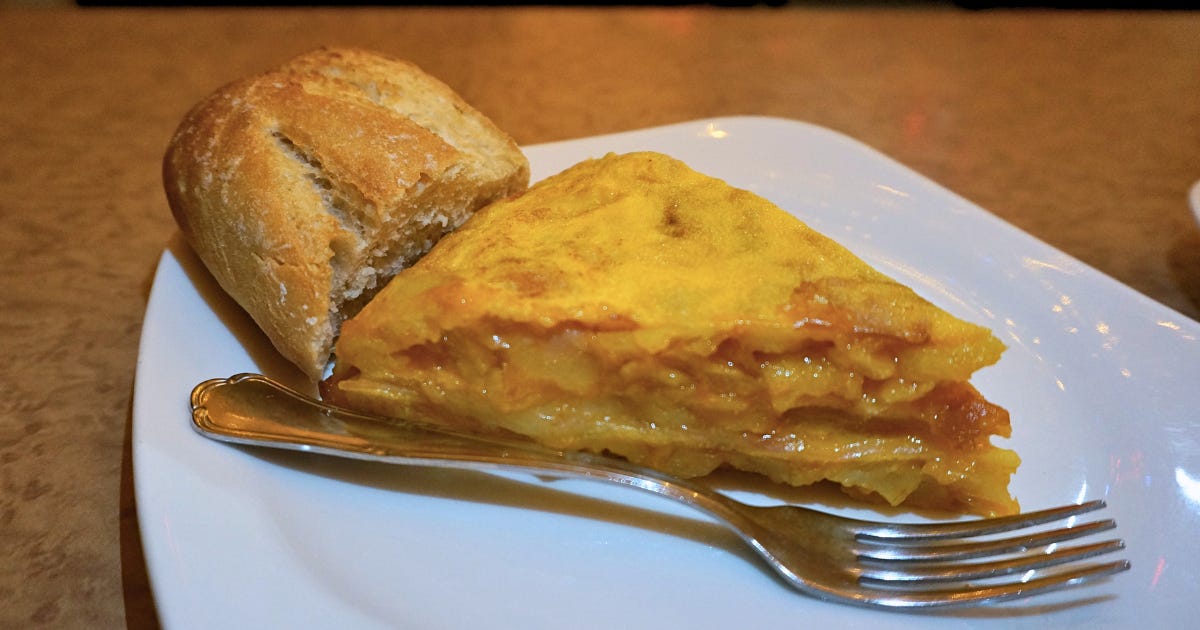
#2 Tortilla de Patata: Potato and Egg Omelette
Another classic, tortilla de patata can be found at almost every authentic Spanish bar. It’s a fried potato-and-egg omelette (often made with onions for extra flavor) that’s served either with ham and cheese, the famous garlic-mayo alioli (my personal favorite), or in a baguette as a sandwich.
This dish can be eaten at any time of day—for breakfast, as a snack, or as a main dish for lunch or dinner. Each restaurant makes it a little different, so try it a few times to see which version you like best.
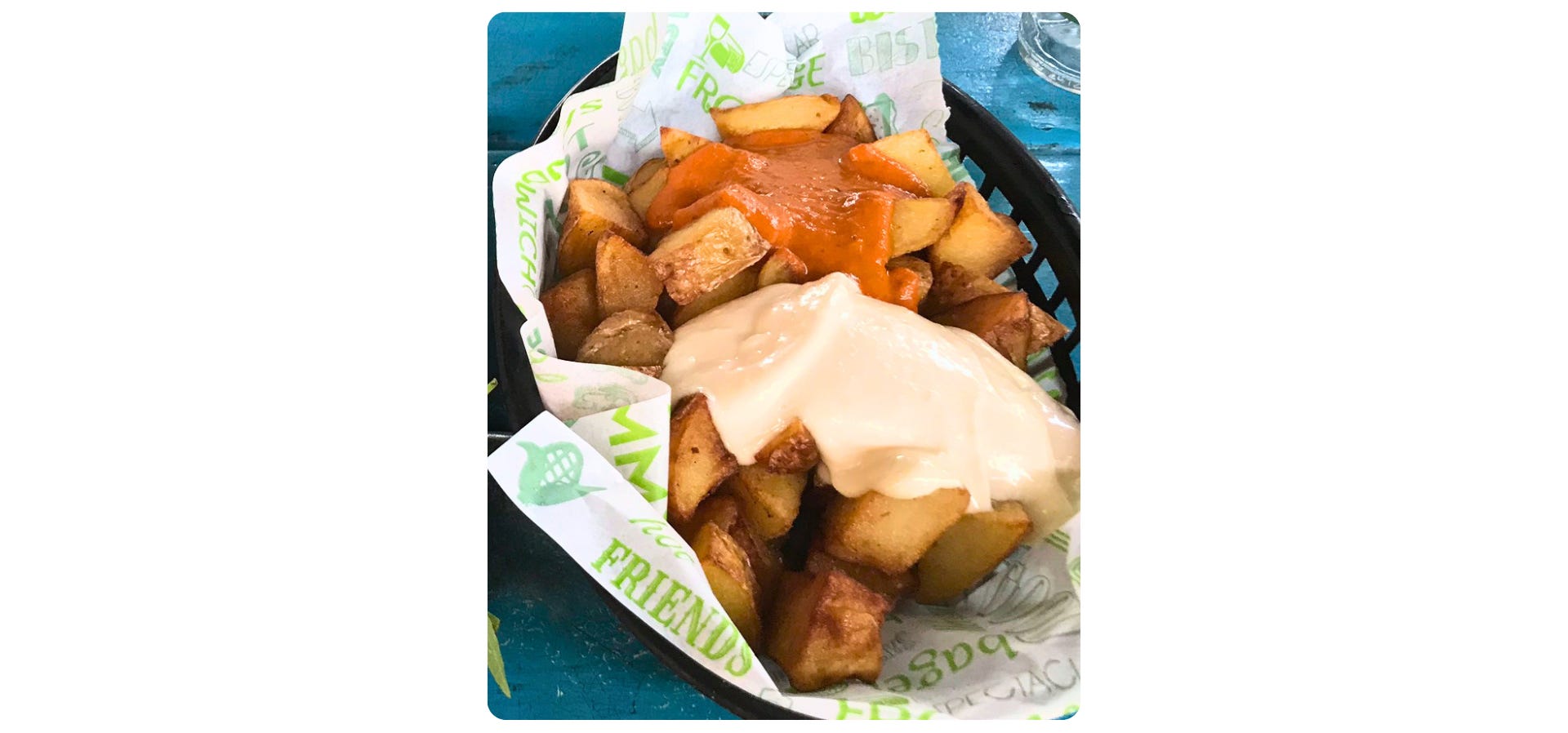
#3 Patatas Bravas: Chunky Fried Potatoes With Alioli and Bravas Sauce
My favorite tapa of all time, this french-fry-esque dish is crispy, filling, and topped with amazing sauces: creamy garlic alioli and a spicy paprika sauce. It’s on almost every menu, because it’s that good.
The fried potatoes typically come as small cubes, but some places get creative with the shape (like Tapería La Boya in Alicante, Spain that shaped them into thinner, potato-chip-like bites).
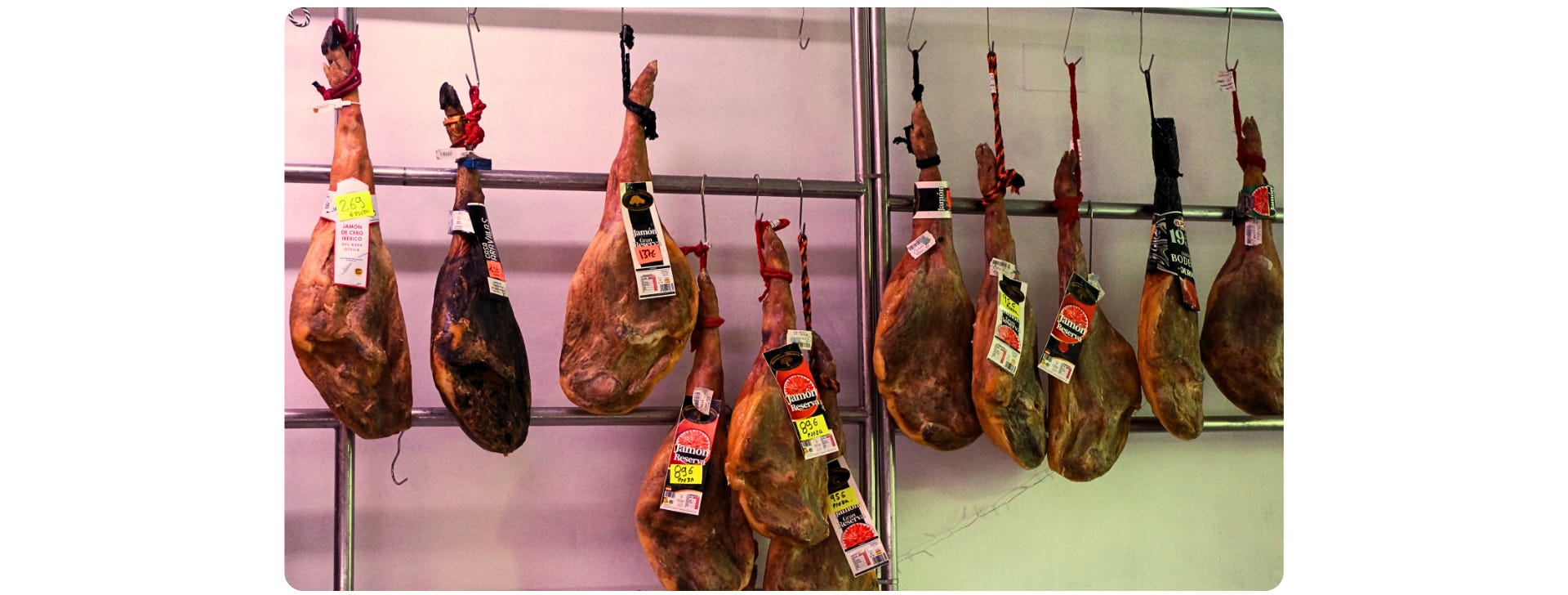
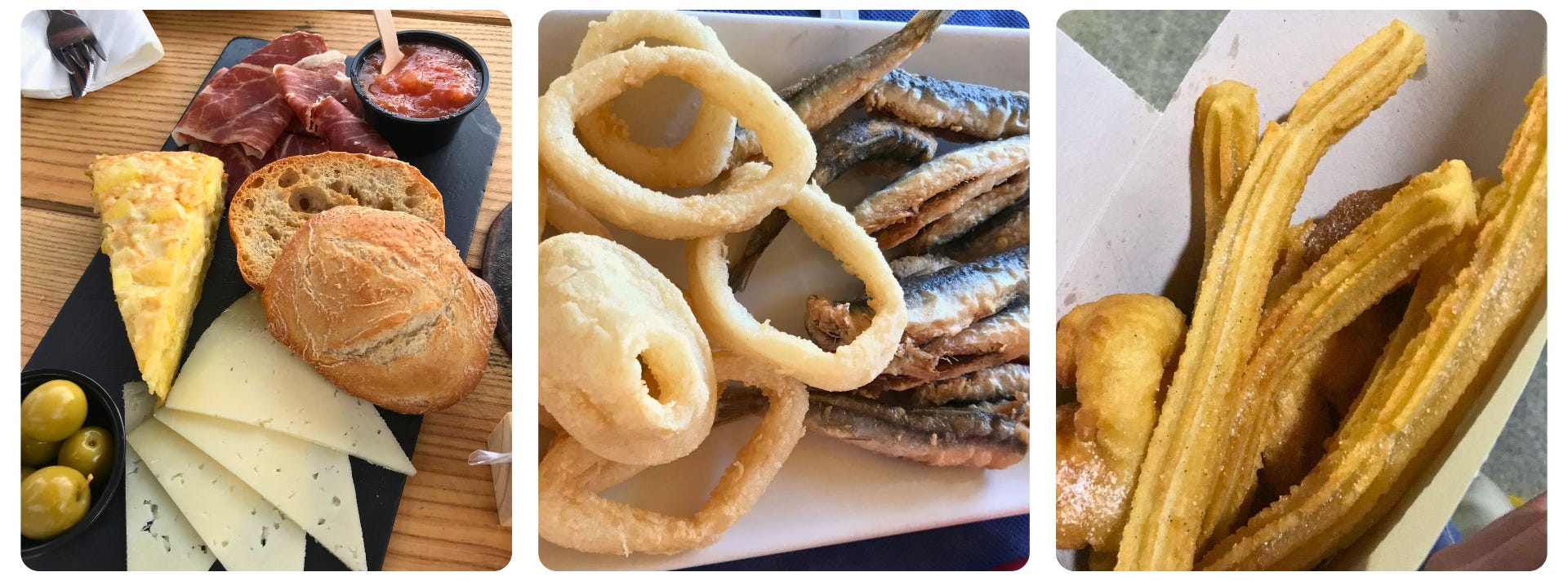
#4 Jamón Ibérico: Cured Iberian ham
The first time I tried jamón ibérico, I was not a fan. Later, I realized that there are hundreds of different varieties, styles, and—most importantly—quality levels of this Spanish product.
When I tried expensive, top-level Iberian ham from a small, family-run jamón shop in Alicante, I realized I didn’t dislike jamón ibérico, I just have expensive taste.
My advice: make sure you try quality Iberian ham. It makes all the difference.
This bite is typically served on a platter with cheese and other finger foods. You can also order it in a baguette sandwich. There are stores all over Spain that sell jamón ibérico—and they’re easily recognizable because the pig legs are hanging from the ceiling. Most places will shave off a piece for you and let you try before you buy.
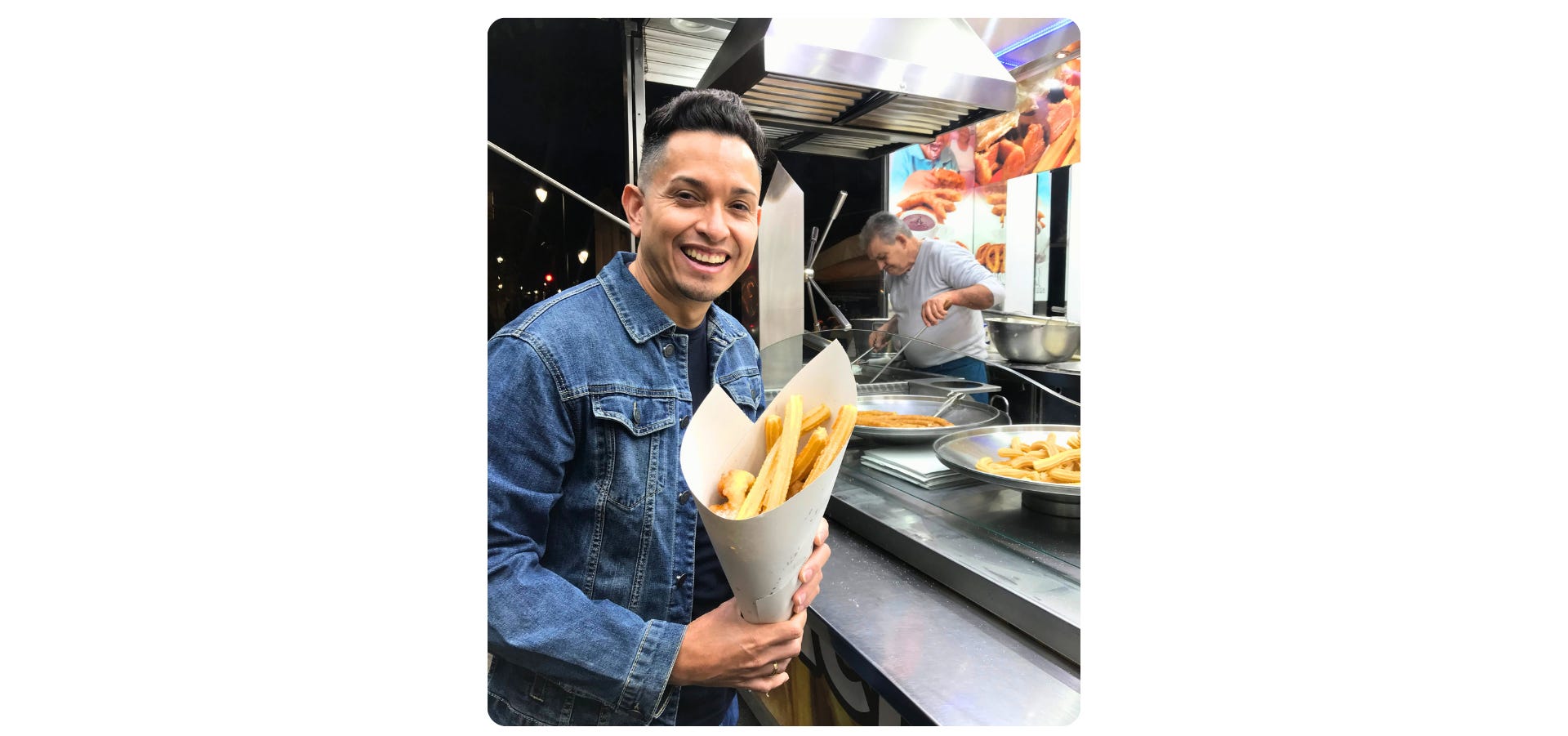
#5 Churros con Chocolate: Fried Churros and Thick, Warm, Chocolate Dipping Sauce
If you visit Spain in the winter, you’ll see food stands selling churros con chocolate on almost every street corner! This famous treat is the perfect dessert to end the night. The churros are crispy and made right on the spot. The chocolate isn’t your typical drinkable hot chocolate—it’s thick, mildly sweet, and meant for dipping the churros.
You can also find other churros variations at the churros stands. Don’t be afraid to try porras (thicker, fluffier churros) or buñuelos (not to be confused with Colombian buñuelos, these are fluffy, airy, dough balls.)
If you’re in Madrid, stop by Chocolatería San Ginés to try churros con chocolate at a cafe that’s been around for over 100 years—and is open 24 hours a day, 7 days a week!
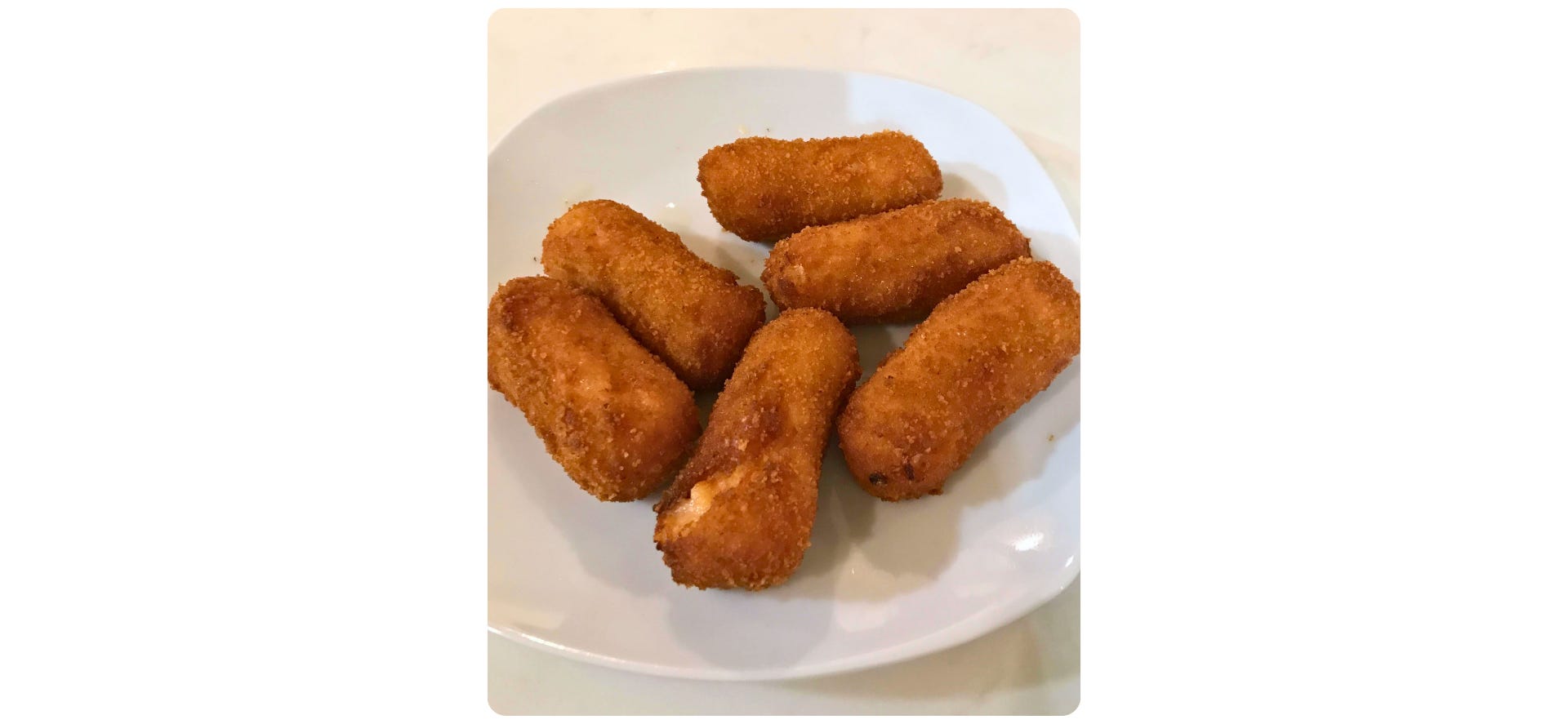
#6 Croquetas: Deep Fried Mozzarella Sticks (But Creamier and Better)
Another very common Spanish bar food, this snack is made with a creamy béchamel base and either ham, cheese, meat, or fish. It’s coated in eggwash and breadcrumbs then deep fried.
There are many variations of these crispy tapas—every place makes them a little different. Oh, and they’re served flaming hot, so be careful.
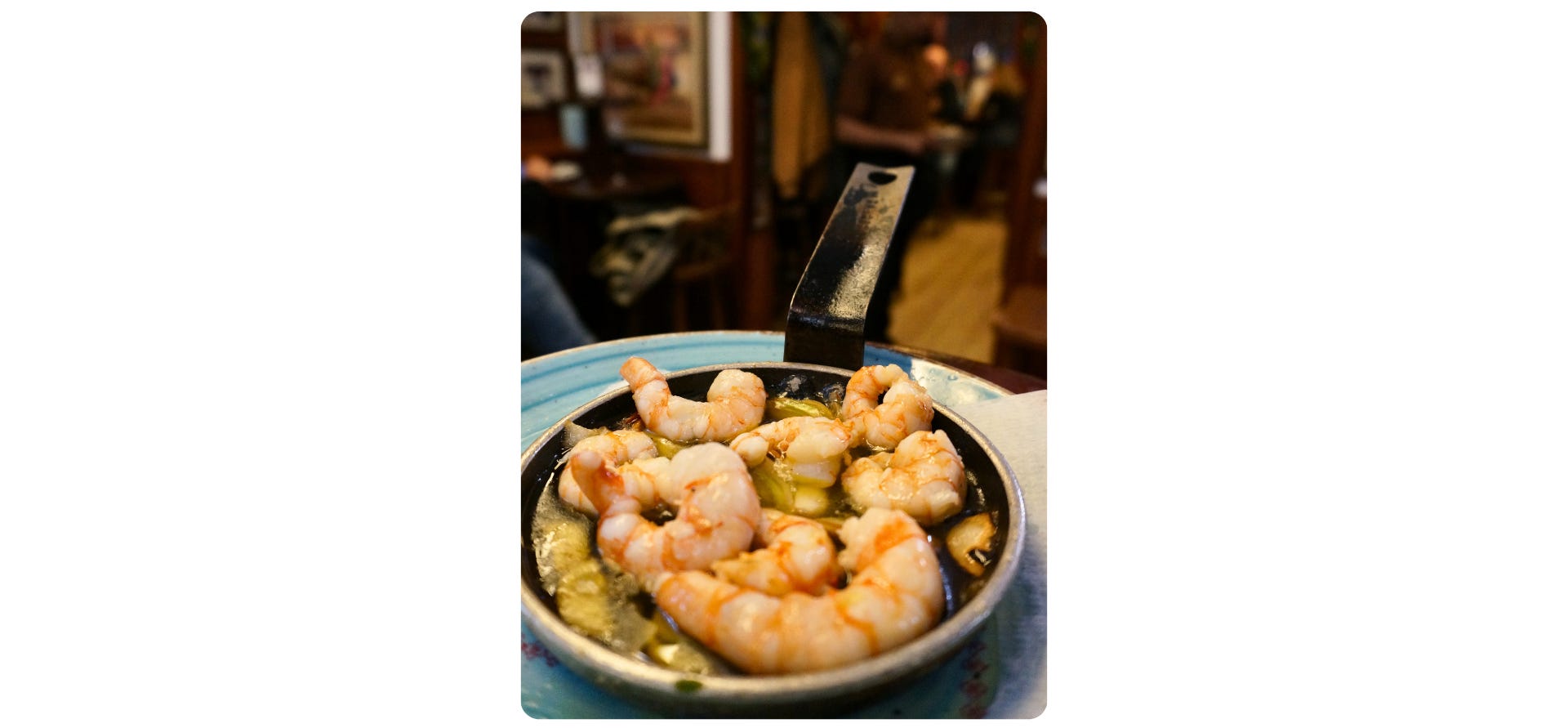
#7 Gambas al Ajillo: Sauteed Garlic-and-Lemon Shrimp
Another delicious seafood dish, gambas al ajillo are peeled shrimp in a rich garlic and olive oil sauce. It’s typically served with slices of Spanish bread, and it’s a simple but delicious dish.

#8 Zumo de Naranja: Fresh-Squeezed Orange Juice
I wouldn’t put orange juice on a list of my favorite, most authentic Spanish dishes if it wasn’t absolutely incredible. So, I’ll tell it like it is: the best orange juice I’ve ever had is Spanish orange juice.
Just walk into your nearest Mercadona (a Spanish chain grocery store), go to the produce section, grab a one-liter plastic bottle, and use their giant juicing machine to try it yourself. It’s simply the best.
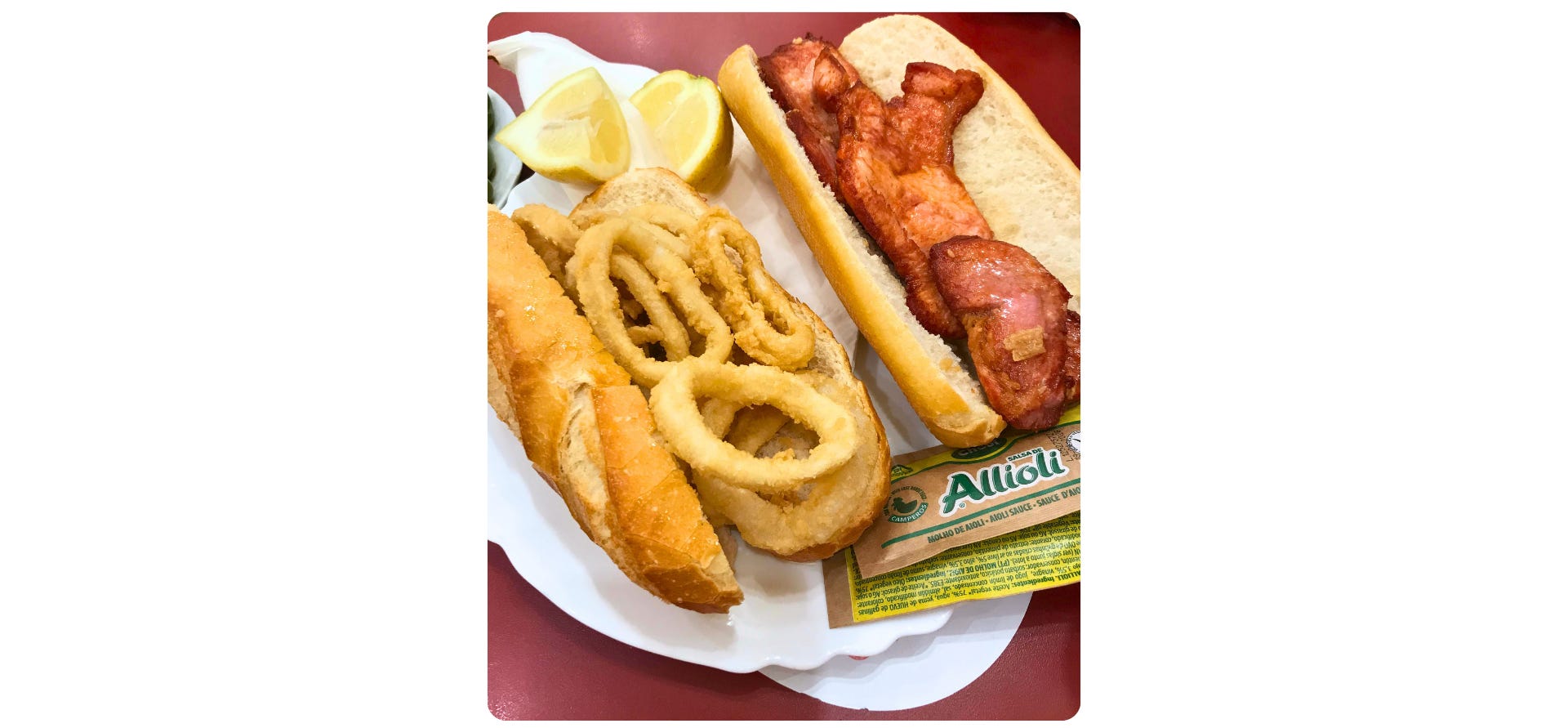
#9 Bocadillo de Calamares: Fried Squid Sandwich
Sandwiches made from a crispy, warm baguette are a popular snack. And one of my favorite Spanish sandwiches is the bocadillo de calamares.
Packed with breaded, perfectly juicy fried squid and doused with fresh lemon juice and alioli, this sandwich is the essence of simplicity. It’s one all seafood- and calamari-lovers must try.
My favorite spot to grab one is at La Campana, right outside of Plaza Mayor in the heart of Madrid.
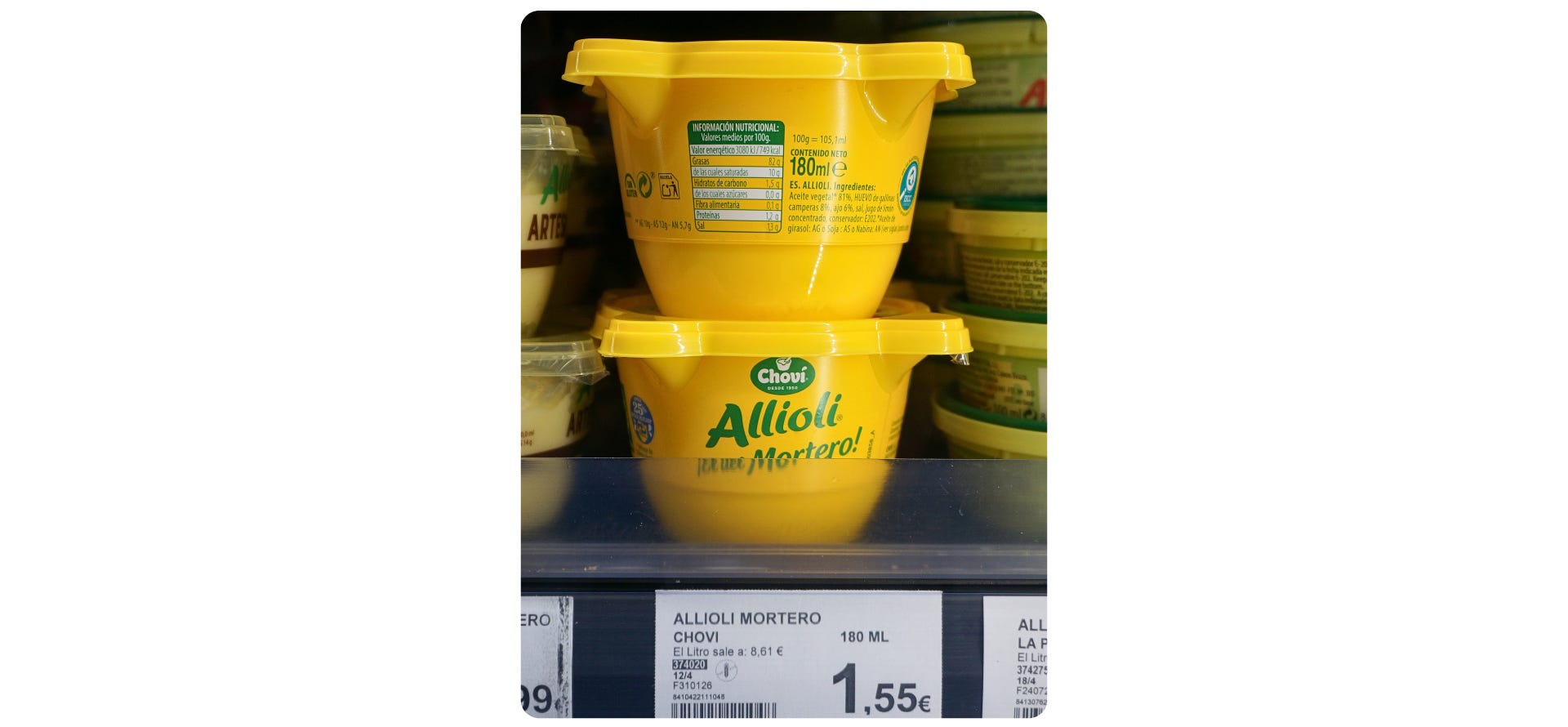
#10 Alioli: Garlic Mayonnaise
Yes, this deserves its own special mention, because it’s that iconic. Whether you put it on tortilla de patata, your bocadillo de calamares, or just a plain old baguette, it takes your taste buds to a whole new level of delight.
You can buy a ¼ cup of alioli at Mercadona for just a few euros. But nothing beats homemade alioli made by a Spanish abuela. I remember learning how to make this delicious mayonnaise in a narrow kitchen in Terrassa, Spain; Rosario, who was probably 80 years old, was an alioli master.
Common Tourist Mistakes
When it comes to eating right in Spain, I see a lot of people make these common mistakes:
Searching for “Tapas” Restaurants. Here’s the thing about “tapas” restaurants: if you find one, it’s probably an overpriced tourist trap. The authentic places that serve tapas don’t have the word tapas plastered on the front. They’re just normal restaurants or bars that serve tapas. You see, tapas is a category of Spanish food, not a type of restaurant.
Ordering Paella for Dinner. Spaniards never have paella for dinner. It’s a lunch dish. Now, you can order paella for dinner, and restaurants will serve it after 5pm, but it’s an immediate give-away that you’re a tourist. (That being said, do what you want—if you’re craving paella, go for it. I’ve done it before, and didn’t get any angry looks.)
Not checking what time restaurants open. The dining schedule in Spain is different, so make sure you check what time restaurants open. Most authentic Spanish places serve lunch from 12pm - 4pm, and don’t open for dinner until 8pm.
What to Know When Ordering Paella
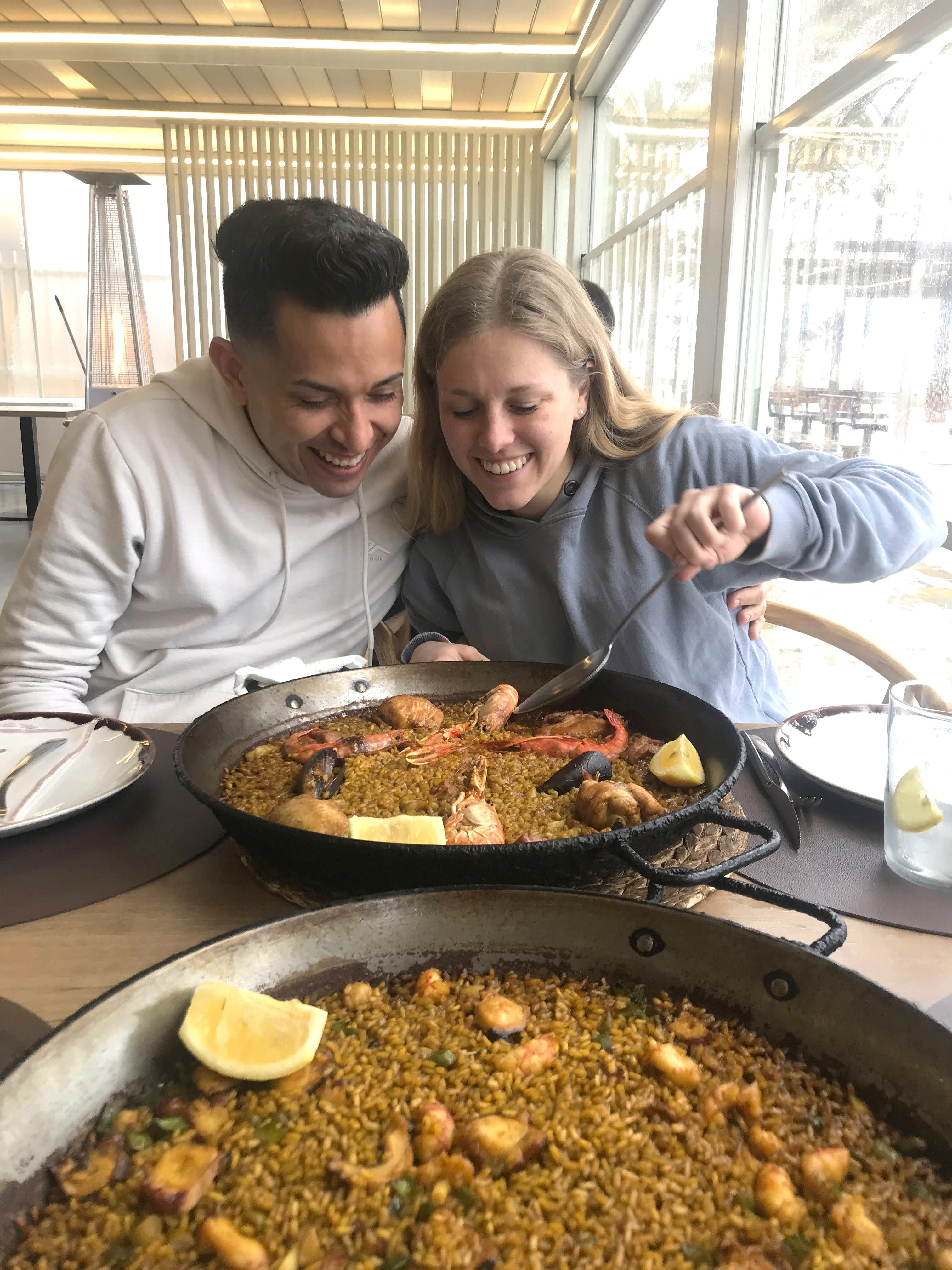
Ordering paella in Spain can be a little tricky. In most restaurants (at least the ones that aren’t tourist traps), you’ll see prices next to the different types of paellas, and then a note that usually says something like: “precios por persona; mínimo dos personas” (prices per person, minimum two people).
That means that if you want to order paella, you’ve got to buddy up with someone at your table and agree on a paella to share. Most places don’t make individual-sized paellas. The paella comes in one big paella pan, and you scoop the rice onto your plate to eat it.
When the check comes, you’ll see a charge per person for the paella. So, if it costs 20€ and two of you share it, it will be 40€ total. If three people share it, it will be 60€ total.
How to Spot an Authentic Restaurant
When you’re looking for restaurants in Spain, keep these recommendations in mind:
Skip the restaurants right on rambla streets. You know the ones, they’ve got menus in English with pictures of the food for every menu item, and there’s almost always aggressive waiters/salespeople waving you in to sit down. They’re overpriced and almost always tourist traps.
Look for locals. If you see a restaurant packed with tourists, it’s either done an amazing social media promo campaign, or it’s not authentic.
Find restaurants with five-star Google reviews. And reviews in Spanish. This is a good indicator of restaurant quality.
Don’t be afraid to wander. Often, the authentic restaurants are a little off the beaten path. Want hole-in-the-wall recommendations of the best places to eat in Spain? Subscribe and I’ll share my favorite restaurants with you!
My Recommendations for Eating Right in Spain
The ten Spanish dishes I’ve shared here are my favorites. They represent Spain well and you can find them easily at many of the restaurants you’ll visit. But there are so many more—and it’s almost impossible to include them all in a quick foodie guide!
In fact, not too long ago, one of my friends here in Spain introduced me to a new Spanish dish that I absolutely loved: tarta de Santiago. This citrusy almond cake was fantastic. I learned that it’s from Santiago de Compostella, a city in the north of Spain, where it was prepared for pilgrims completing the camino de Santiago walk.
During your time in Spain, I hope you discover your own favorite Spanish dishes that aren’t on this list. I hope you enjoy every bite and dive into Spanish gastronomy head-first.
As they say here in Spain, “pan con pan, comida de tontos.” In English, “bread with bread is food for fools.” Variety, contrast, surprise are what makes gastronomy so rich and interesting. So explore, enjoy, and devour all Spain has to offer.
If you enjoyed this article, subscribe for more like it! I write for adventurous, budget-following foodies who want every bite while traveling to be 100% worth the trip.
From Spain I like their churros and also their lomo
Great summary! We live in Spain and love the food, but still can’t get used to dinner after 9pm 😂