


“Not safe at all.”
“If you’re a tourist, do NOT eat the street food or in cheap restaurants.”
“Nasty things like e coli and salmonella.”
“Lacking consistent refrigeration and hygiene.”
You’ve heard it before—eating street food in certain countries is DAngERouS. Well, yes, it can be.
I’ve puked my guts out a few times in various locations in beautiful Peru. You live and you learn.
But if you use common sense, street smarts, and know the basics about Peruvian cuisine, you can enjoy some of the most delicious, most authentic, and most affordable food you’ve ever tasted in your life—yes, right in the streets of Peru.
Now, I can’t give you the common sense or street smarts (that’s up to you, my friend), but I can show you the basics of Peruvian street cuisine to help you find not only safe street food—but the best the streets have to offer.
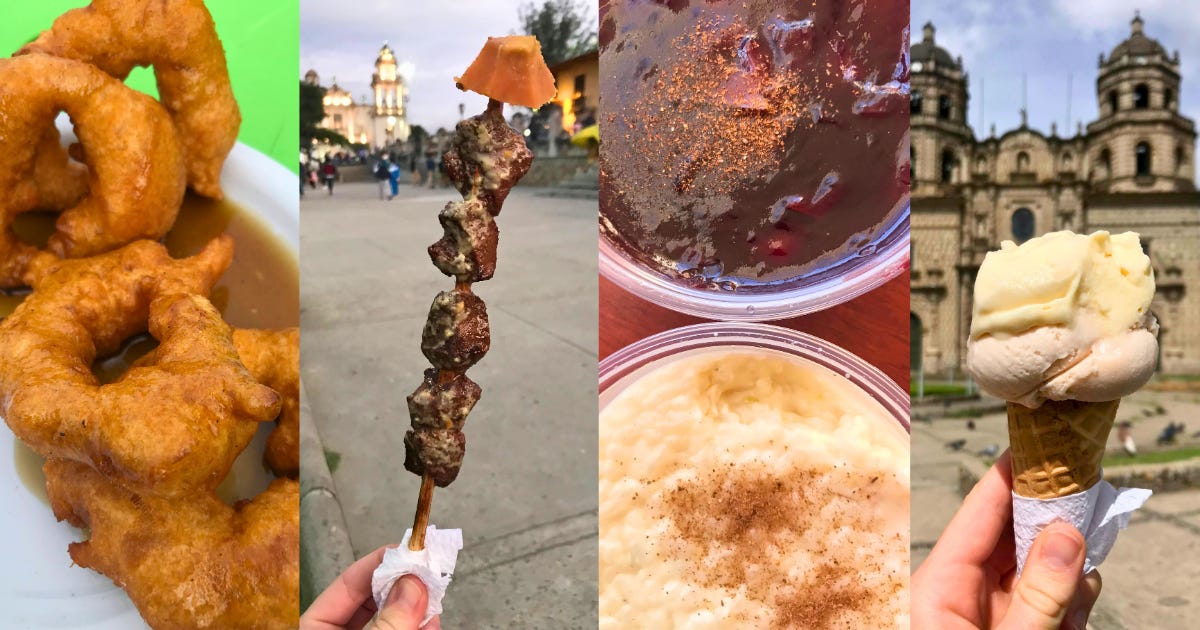
The Safest Peruvian Street Foods: These Won’t Do You Wrong
The majority of the street food you’ll try in Peru is pretty safe. And, each of these costs only about 10 soles (around $2.75 USD) or less. But, of course, you’ll want more than just one!
These are my favorite street eats that can be found on almost every corner.
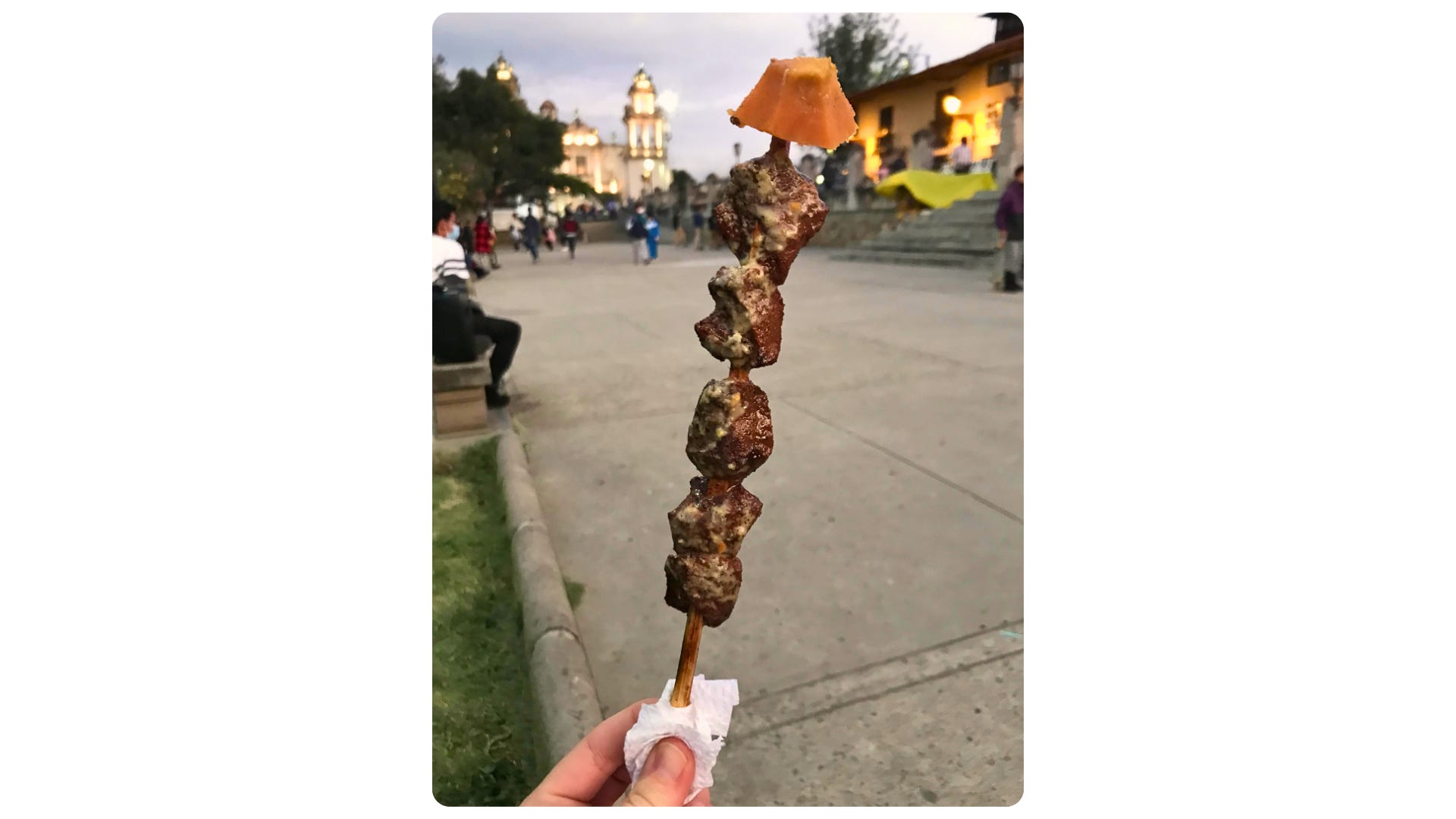
Anticuchos: Grilled Beef Hearts
Intensely marinated beef hearts sizzle over a fiery grill on a street corner in Trujillo, Peru. These beef hearts have been cubed and marinated in a spicy mixture of traditional Peruvian peppers, both aji panca and aji amarillo, along with garlic, oregano, vinegar, and Peruvian beer.
Then, they hit the grill. They’re brushed with more of that delicious marinade as they cook to juicy, tender perfection. Finally, they’re served with cooked Peruvian potatoes and—of course—spicy sauce.
It’s hard to pick favorites, but anticuchos are definitely in my top 3 favorite Peruvian street foods. Anticuchos are an absolute must-try. Intense flavor, tender texture, and super cheap.
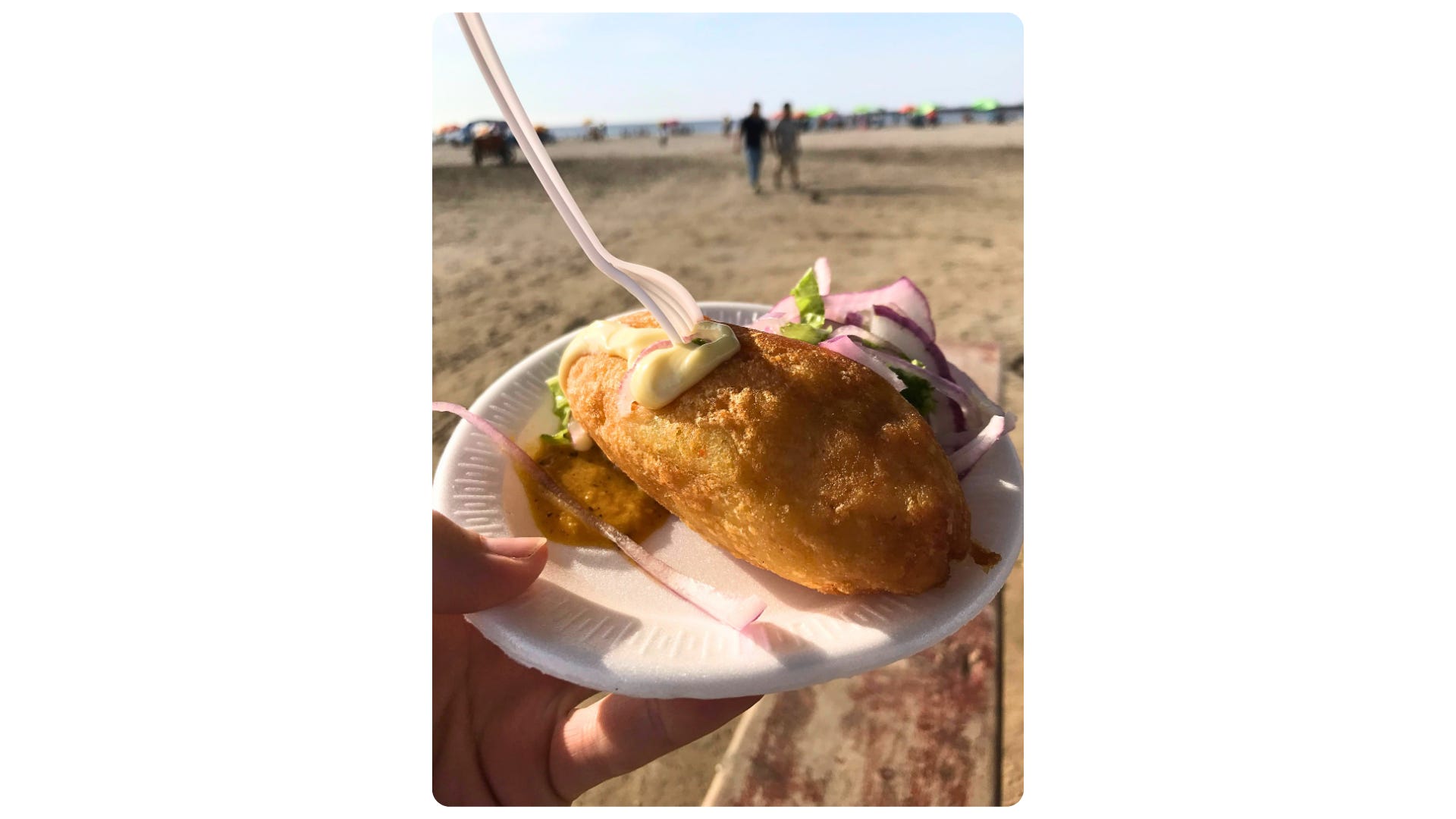
Papa Rellena: Fried Filled Potato
Mashed potatoes are formed into an ovalish ball and filled with cooked, deliciously-seasoned ground beef, a slice of spicy aji amarillo (peruvian pepper), a hard-boiled egg, and an olive—then fried until the outside layer of potatoes is crispy and golden.
Then, your papa rellena is accompanied by zarza criolla: a mix of finely sliced red onions and spicy peppers doused in vinegar and lime juice. And of course, the sauces—Peru is all about the sauces.
Papas rellenas have a delicious flavor combo (and, although Colombia also has its version of papa rellena, Peru takes the W on this one).
Choclo con queso: Peruvian Corn with Cheese
This street food is especially popular in the Andes region of Peru—you can find it in cities like Cajamarca, Cuzco, and Huaraz. The simplicity of this dish is a true testament to the quality of the ingredients in Peru and the rich agriscience that was carefully developed by the Incas centuries ago.
It’s literally just boiled corn with cheese. But it’s Peruvian boiled corn with cheese. And the choclo (corn) in Peru is the best in the world. I don’t even like corn, but I LOVE choclo.
This simple combo is filling and delicious, making it the perfect afternoon snack. Buy some anticuchos to accompany it, and you’re set.
Salchipapa: Fries with Hot Dog Slices
This is the favorite of almost every Peruvian kiddo, and who blames them? It’s comfort food to the max—crispy fries piled with hot dog slices and drizzled in ketchup, mayo, and Peruvian spicy sauces. It’s fantastic.
The perfect late-night snack, you can find this street food all over. There are even restaurants that are dedicated to selling only salchipapa. You can also get variations like salchipollo—fries with hot dog and a piece of fried chicken—or request a fried egg or different types of sausage for your salchipapa.
Oh, and Peru has over 4,000 varieties of potatoes, so the potatoes that you eat with salchipapa are different from the ones used to make papa rellena, and different from the potatoes that accompany your antichuchos.
What can I say? Peruvian chefs know what they’re doing.
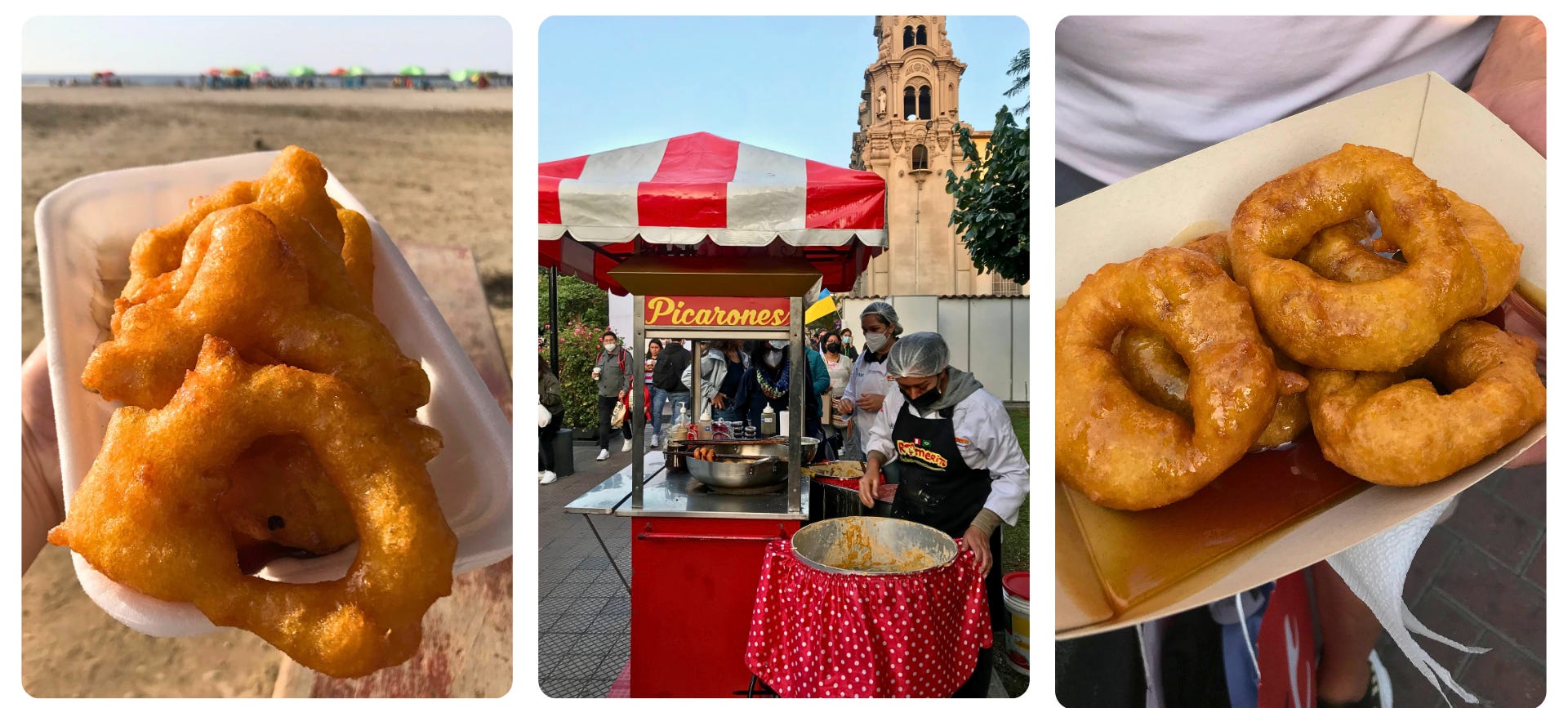
Picarones: Peruvian Sweet Potato Donuts
Time for the sweet side of street food.
Picarones are one of the most popular Peruvian treats. Often known as Peruvian donuts, these fried treats are made from sweet potato and squash (yep, that means they’re healthy!). They’re formed into circular, donut-like shapes, then fried until golden brown (okay, maybe not so healthy).
Then, the picarones are doused in a sweet, honey-like sauce with a soft texture and a fantastic flavor.
If you’re in Lima, one of the most popular places to eat this sweet treat is in Parque Kennedy. You’ll find a bunch of different red street food carts making picarones right before your eyes—it doesn’t get fresher than that.
Cachangas: Crispy Fried Peruvian Bread
Another fried treat, cachangas are a mix between a sweet tortilla and a fried flatbread. They’re crispy, sweet, and simple. Eat this with a hot chocolate on a cold day and your soul will thank you.
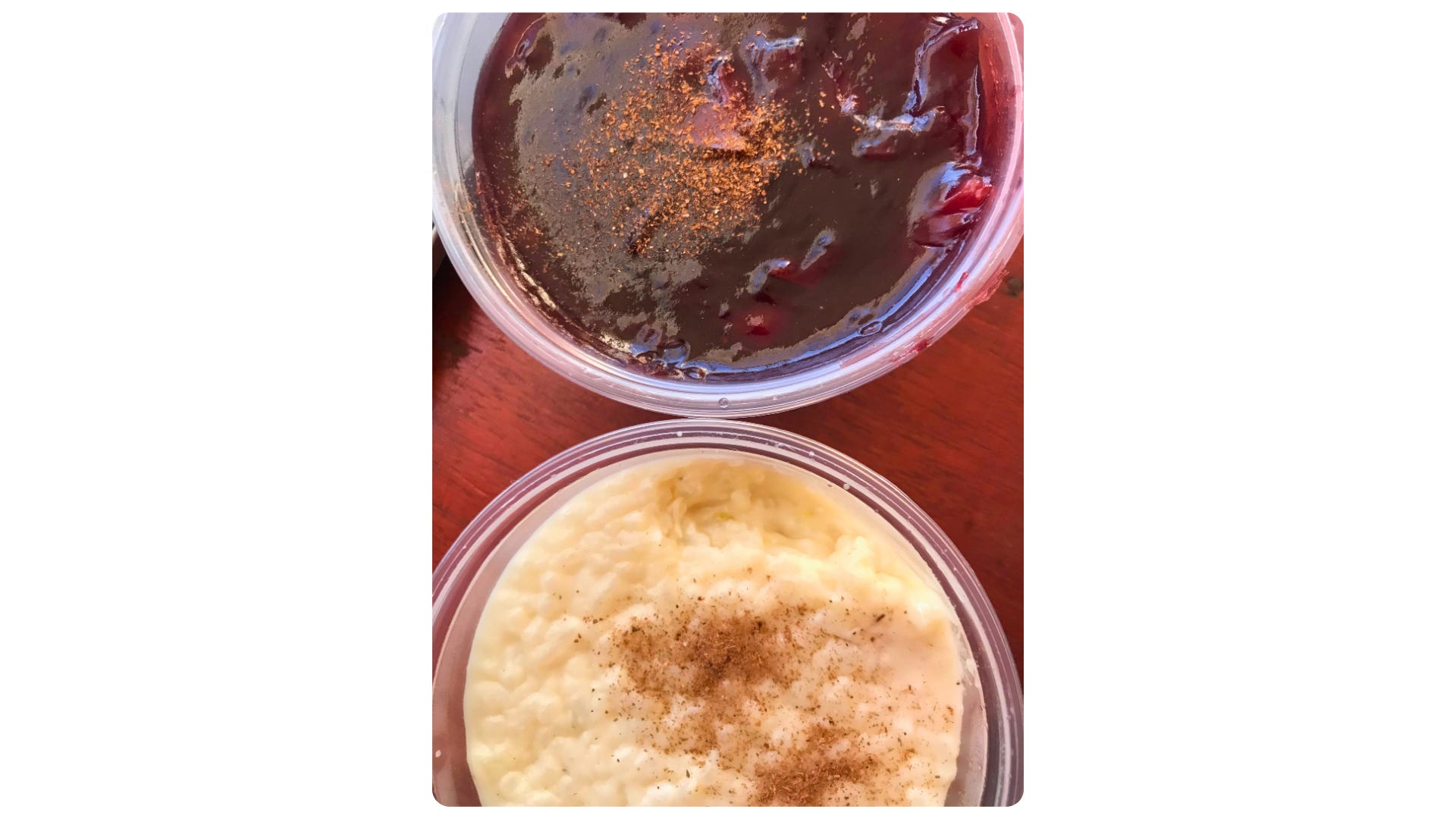
Mazamorra Morada y Arroz Con Leche: Purple Corn Pudding and Rice Pudding
This is my favorite Peruvian sweet treat—warm rice pudding topped with cinnamon and accompanied with mazamorra morada. Peru’s purple corn has a truly unique flavor (it’s also what they use to make chicha morada, the famous purple Peruvian drink). The creamy, slightly fruity, corn pudding combined with the sweet rice pudding is one of a kind.
One of the best mazamorra morada y arroz con leche I’ve had was one I’d buy from a neighbor in my favorite surf town in Northern Peru.
She’d make them in her house and set up a little stand outside her front door and sell them for 3 soles ($0.80 USD). After surfing in the morning and teaching English online in the afternoon, I’d wander down the street to eat my mazamorra morada y arroz con leche and chat with the kind woman who’d prepare this delicious dish.
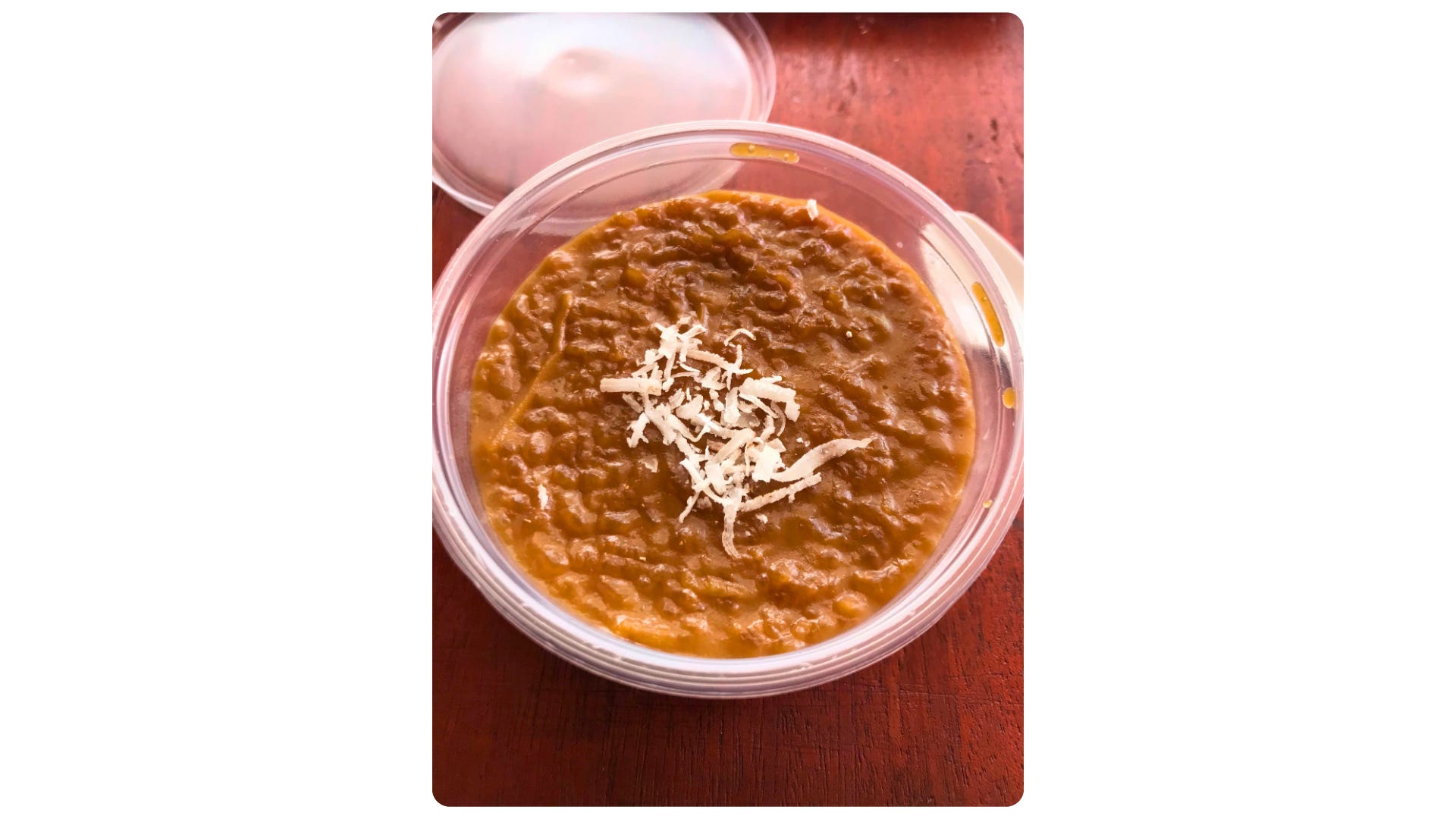
Arroz zambito: Brown Sugar Rice Pudding
Arroz zambito is a variation of arroz con leche made with brown sugar and coconut. If you like rice pudding, you must try this delicious treat. Served warm, this treat is a delicious dessert that’s unique to Peru.
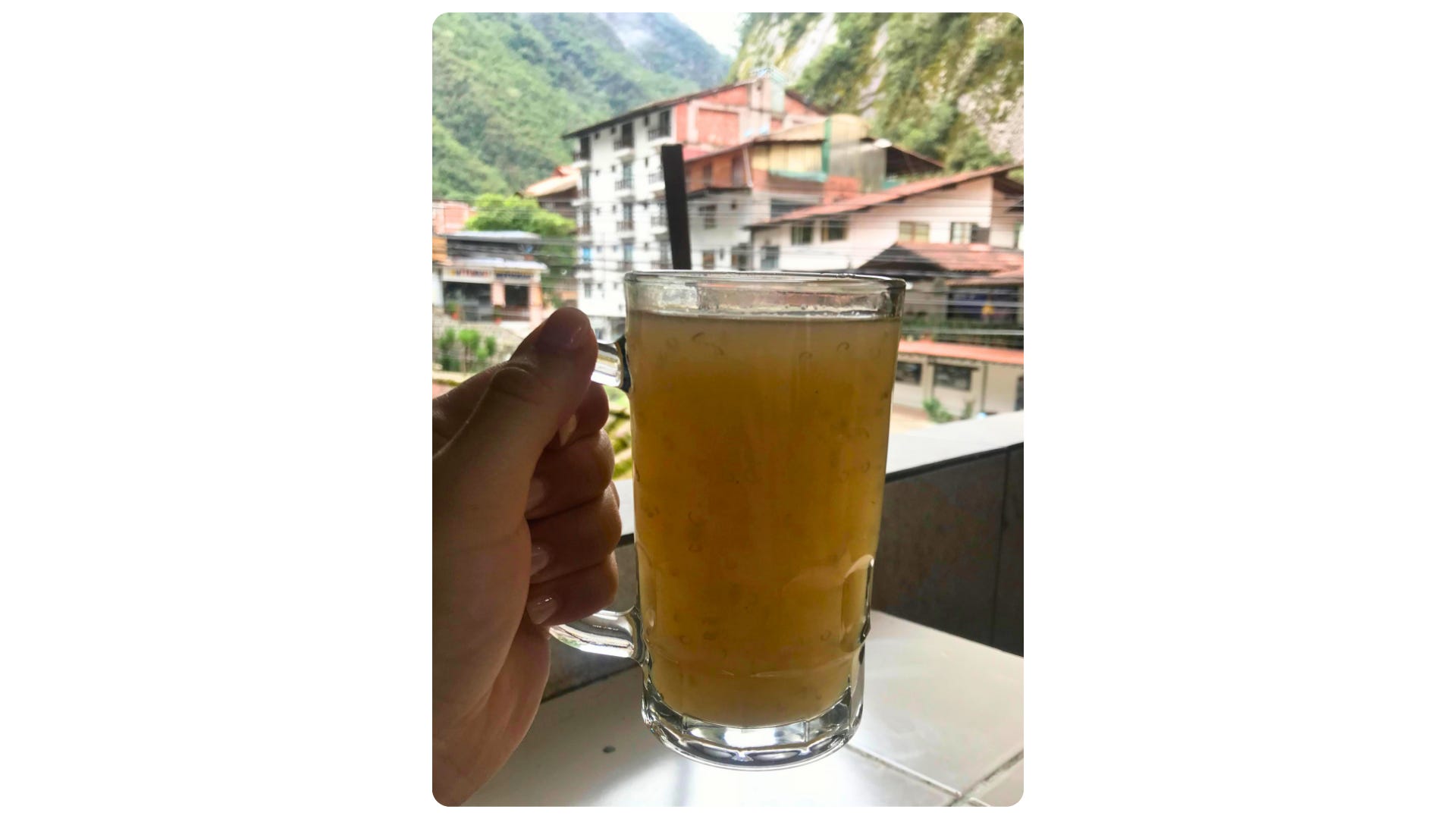
Quinoa: A Breakfast Quinoa Drink
All of the street foods previously mentioned are ones you can try in the afternoon / evening. Most of the street vendors spend the morning buying ingredients and preparing the food, then they set up shop and sell in the late afternoon / evening.
But not this one. This is a popular breakfast street food that’s absolutely fantastic—very nutritional, filling, and delicious. Quinoa, native to the Peruvian Andes region, is one of the rare plant foods that contains all nine essential amino acids.
Honestly, I’ve yet to find a better way to prepare and eat quinoa than in this delicious Peruvian breakfast drink. Quinoa is boiled with pineapple skins, brown sugar, apple slices, cinnamon, and cloves. Then a gelatinous mixture is added to thicken it up.
This sweet, pineapple-flavored drink is served warm and often with a breakfast sandwich, or a slice of keke: homemade, unfrosted cake.
The Most Delicious Peruvian Street Food: Ceviche (And How to Try It Safely)
Ceviche is, hands-down, the most delicious Peruvian street food—but it’s also the riskiest. Since this popular dish includes raw fish, it’s one of the dishes that, if prepared incorrectly or unhygienically, can send you to the bathroom or even the hospital.
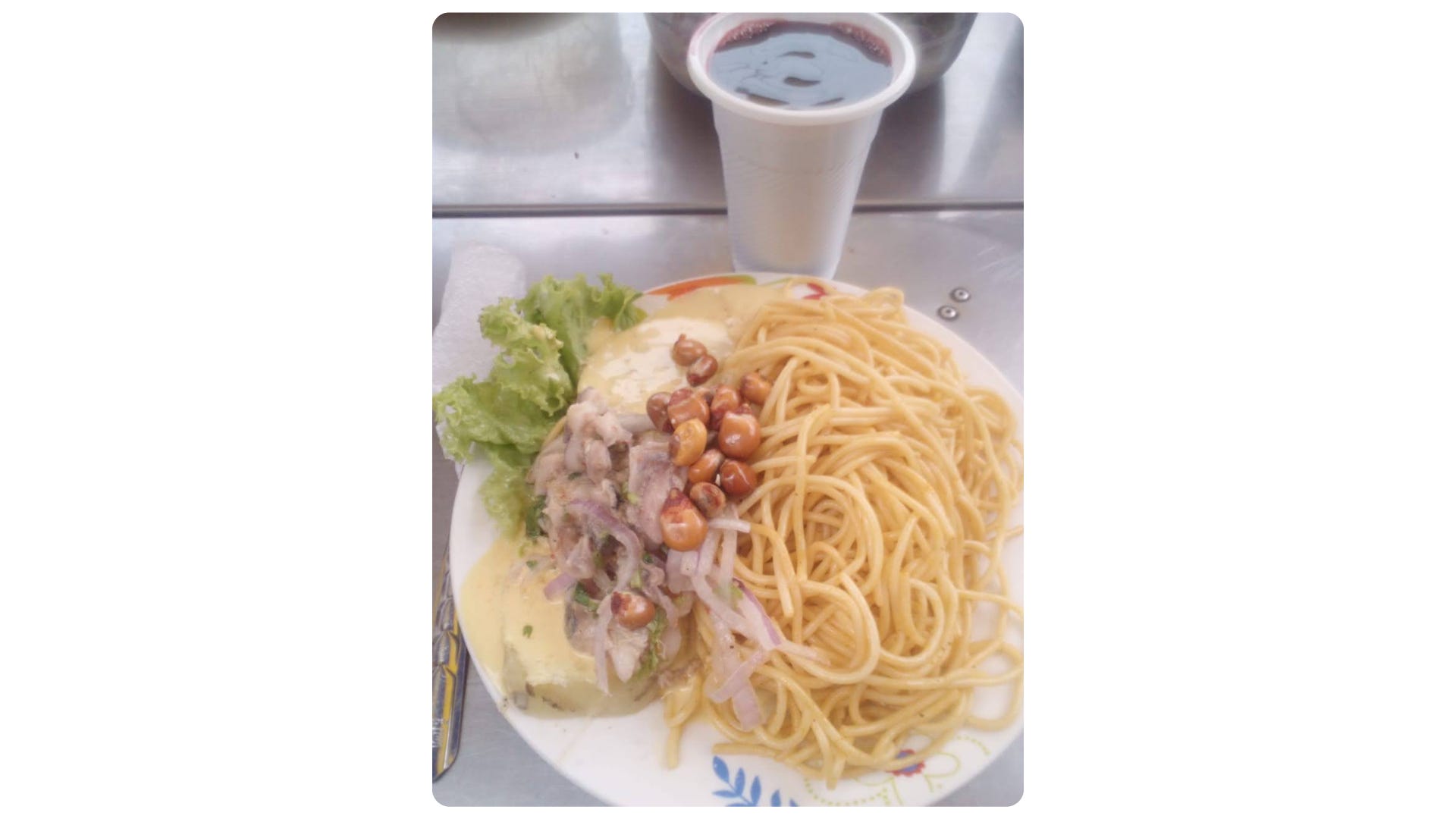
One time, my friend took me to eat a combinado (ceviche, with papa la huancaina, and spaghetti—don’t judge, it’s strangely delicious) in an outdoor market on a hot day. The place looked a little run down—as most street food places do—and the ceviche was pre-made, just chilling out there in a plastic container, under the sun.
It was delicious, but the next day, on a bus to a nearby town, I had sharp stomach pains and actually had to tell the bus to stop and take a taxi back to my place. I almost passed out going up the stairs and miraculously made it to the bathroom in time for the ceviche to leave my body.
So, when you eat ceviche in the street, make sure it has NOT been sitting in the sun for a few hours before it enters your body.
Here’s how you can choose a safe ceviche street food vendor:
Choose a vendor that makes the ceviche at the moment, rather than one that has it pre-made already. It takes less than five minutes to make ceviche (when the ingredients are precut and ready to go), and most spots do this.
Look for signs of refrigeration. If there’s a cooler or a mini-refrigerator where the fish is being stored before it’s turned into ceviche, that’s a good sign.
Only try ceviche in coastal cities like Lima, Trujillo, Chiclayo, Chimbote, and Piura. If you try ceviche on the streets of Andean cities like Cuzco, Cajamarca, or Huaraz, it won’t be as good. (It’s like trying brisket in Ohio, it’s just not the right place.)
Eat in popular street markets. The best street food ceviche I had was at the Magdalena de Mar market in Lima. Street market vendors usually have larger spots with running water to clean and prepare the food more sanitarily, and if they’re paying for a spot, they’ve probably already proven themselves as a quality chef in the market arena.
More Pro Tips For Eating Street Food While Avoiding Gastrointestinal Infections
The most common cause of sickness when traveling is traveller’s diarrhea, caused by drinking water or eating food that has bacteria, viruses, or parasites. You can get sick by eating in restaurants or by eating street food.
To enjoy eating while traveling, here are a few more pro tips:
Never drink tap water in Latin America. Unclean water is the common culprit, and sometimes fresh fruit juices are made with water that’s been contaminated. Order soda or bottled water at restaurants. (Chicha morada is usually safe because the cooking process involves boiling the water and purple corn together.)
Lettuce often contains bacteria, and if it’s not thoroughly washed, it can be dangerous. If lettuce looks sketchy, don’t eat it. After all, it’s just lettuce, you probably don’t even eat it in your home country anyway, so why eat it in Peru? (Unless, of course, it’s the salad that accompanies your pollo a la brasa, then, you should definitely eat it.)
Choose a vendor with a line. If it’s a local favorite, that’s a good sign. Choose larger street vendors that have a cart and a name for their cart—the ones that are just starting out are sometimes less reliable and not as good.
Eat when the locals eat. If you arrive at 4pm and get the last bit of ceviche that a street vendor has left after the lunch rush is over, that’s not good. Eat when the locals eat so you can get freshly cooked food that hasn’t been sitting outside in the sun for three hours.
If it doesn’t look like the pictures, avoid it. Since I’m a Peruvian food connoisseur 💁🏼♀️, with just a quick look, I can tell if something looks right or a little off. If it looks funky, move along. There will be better options on the next street corner.
And, listen to your gut. If you get a bad feeling about something, it’s better to be safe than sorry. Spending your vacation in your hotel bathroom isn’t enjoyable (trust me—been there, done that).
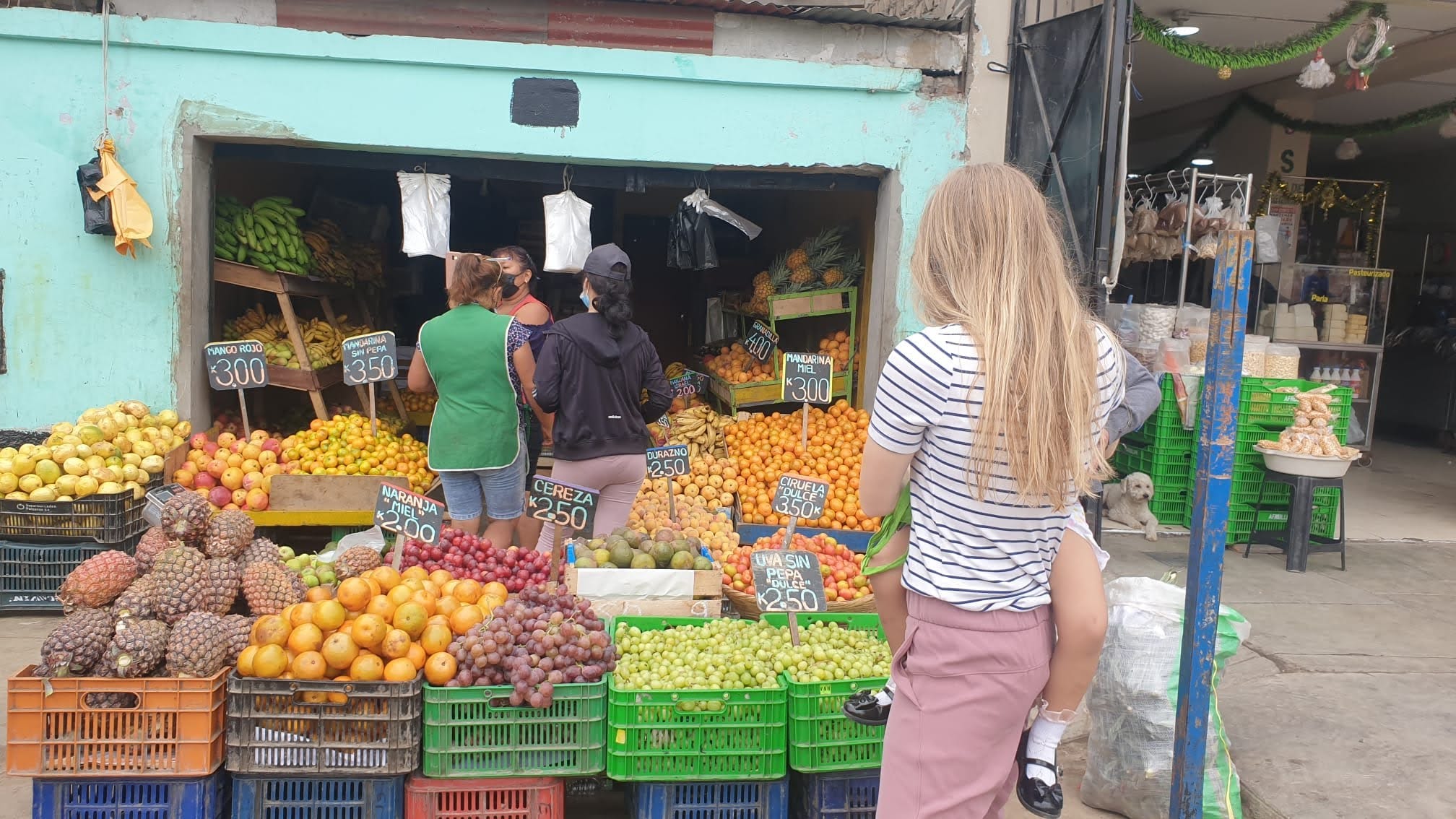
Don’t Be Scared of Street Food
Peru has the best street food in the whole world. And it’s safer than most people make it sound. You just have to use some street smarts to find the best vendors. Trust your gut, be adventurous, but don’t be dumb.
Once you try a few of these street food favorites, you’ll be hooked. You’ll walk through the streets of Peru and feel like you’re in heaven—it’s everything your stomach could possibly desire, at your fingertips!
No matter what city you decide to visit in the beautiful country of Peru, there’s so much street food to discover and to fall in love with.
Traveling to Peru soon? Get the complete 4-day foodie itinerary for Lima, Peru. Inside, you’ll find:
A day-by-day eating plan (breakfast, lunch, dinner, and dessert),
An organized and easy-to-use Google Map with all the restaurant mentioned here (plus a few more I recommend if you have more time),
And, exactly what to order at each spot so you can enjoy the classics of world-famous Peruvian gastronomy.
Love this!! Pan con Chicharrón is another Peruvian all-time classic!